Search Results
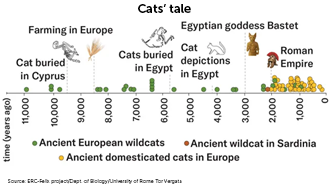
Cats and their ancient 9 lives
Like a toy on a string, the timing of cat domestication has been a moving target. Now researchers have pounced on a new timeline suggesting that tame descendants of African wildcats left the continent more recently than realized.
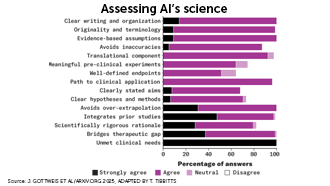
Is AI the new research buddy?
Powerful forms of artificial intelligence are now playing roles in research labs around the world. While they change how humans make discoveries, the AI tools aren’t fully autonomous yet. Some scientists are skeptical, while others are working to make the idea a reality. This could change how science is done..

Cutting Onions and Conserving the Okefenokee
Check out these lesson plans paired to the June/July issue of Science News Explores and use the phenomena of dicing onions to have students discuss how liquids respond to pressure changes and introduce students to the ecological and cultural importance of the Okefenokee Swamp before asking them to create an educational conservation campaign about a […]
The Okefenokee’s outlook
Students will define various types of wetlands and identify their unique characteristics before learning about the Okefenokee Swamp’s function as a carbon sink and its ecological and cultural importance. After learning about the Okefenokee, students will create an educational conservation campaign about the Okefenokee or another vulnerable ecosystem.
Don’t cry over an onion
Don’t cry, just dice that onion with a sharper knife. Scientists experimented to learn what makes the cut: slow slices and sharp blades. Discuss how liquids respond to pressure changes while answering questions about how a better understanding of this minor kitchen problem could translate into major changes in other fields of science.
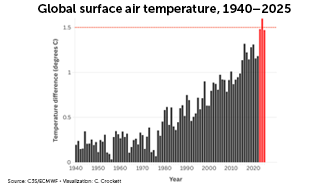
Hot Hot Hot!
The last three years were the hottest on record, a new analysis shows. It was also the first three-year-period in which average global temperatures exceeded 1.5 degrees Celsius above preindustrial levels. That threshold coincides with weather extremes and increased risks to biodiversity and human health.
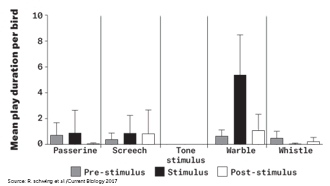
Animal joy
For decades, scientists have struggled to identify or measure joy in animals. Better measurement of creatures’ positive emotions would allow scientists to make strides in studying the causes of happiness and how animals communicate it. So a team of researchers is trying to develop a “joy-o-meter,” a set of metrics to help understand animal emotions.
Debate your AI use
In this activity, students will consider the use of AI in the science classroom. Students will gather information to prepare for a student-moderated debate on whether AI should be used as a tool in the science research process. During the debate, students will collaborate with their peers to formulate their arguments and rebuttals. After the debate’s conclusion, students will work together to determine a policy for ethical use of AI in the science classroom.
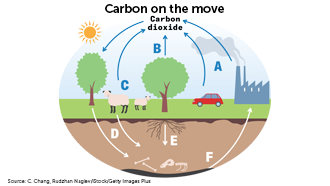
Soil microbes during climate change
A warming world will impact bacteria, fungi and other microbes that play key roles in ecosystems. So researchers are working to understand how climate change will affect microbes — and if humans can harness them to reduce its impacts.
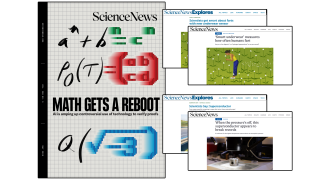
Smart Underwear and a Record-Breaking Superconductor
Check out these lesson plans paired to articles from the May issue of Science News to learn about new underwear technology and have students analyze the relationship between pressure and temperature in superconducting materials.
Record-breaking superconductor
Students will investigate how researchers apply the principles of energy, pressure, temperature and resistance to superconductor research. Students will analyze data to determine the relationship between pressure and temperature in superconducting materials. They will also consider how researchers use this relationship to create new methods for developing superconductors.
A new “smart” underwear
Scientists develop and deploy new tech to answer this question: How many farts per day is “normal?” Learn how the researchers’ experimental design evolved, sometimes in unconventional ways, and discuss how this new tech might help people in the future.