Space
We summarize the week's scientific breakthroughs every Thursday.
- Planetary Science
Neptune’s smallest moon may be a chip off another moon
Neptune’s tiniest moon probably formed when a comet hit a larger moon.
- Planetary Science
Mars’ lake may need an underground volcano to exist
If a lake under Martian ice is real, there must be a subsurface magma pool to keep conditions warm enough for water to remain liquid, scientists say.
- Quantum Physics
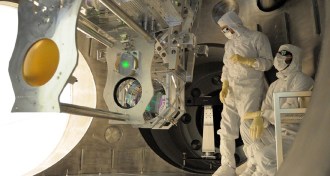
LIGO will be getting a quantum upgrade
Quantum squeezing of light will help scientists make better gravitational wave detectors.
- Planetary Science
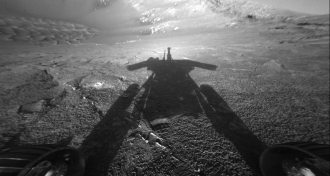
After 15 years on Mars, it’s the end of the road for Opportunity
After 15 years of exploring Mars, a dust storm led to the demise of NASA’s longest-lived rover.
- Artificial Intelligence
Readers marvel at AI, space missions and wombat poop
Readers had comments and questions about defining artificial intelligence, the New Horizons space mission and more.
- Astronomy
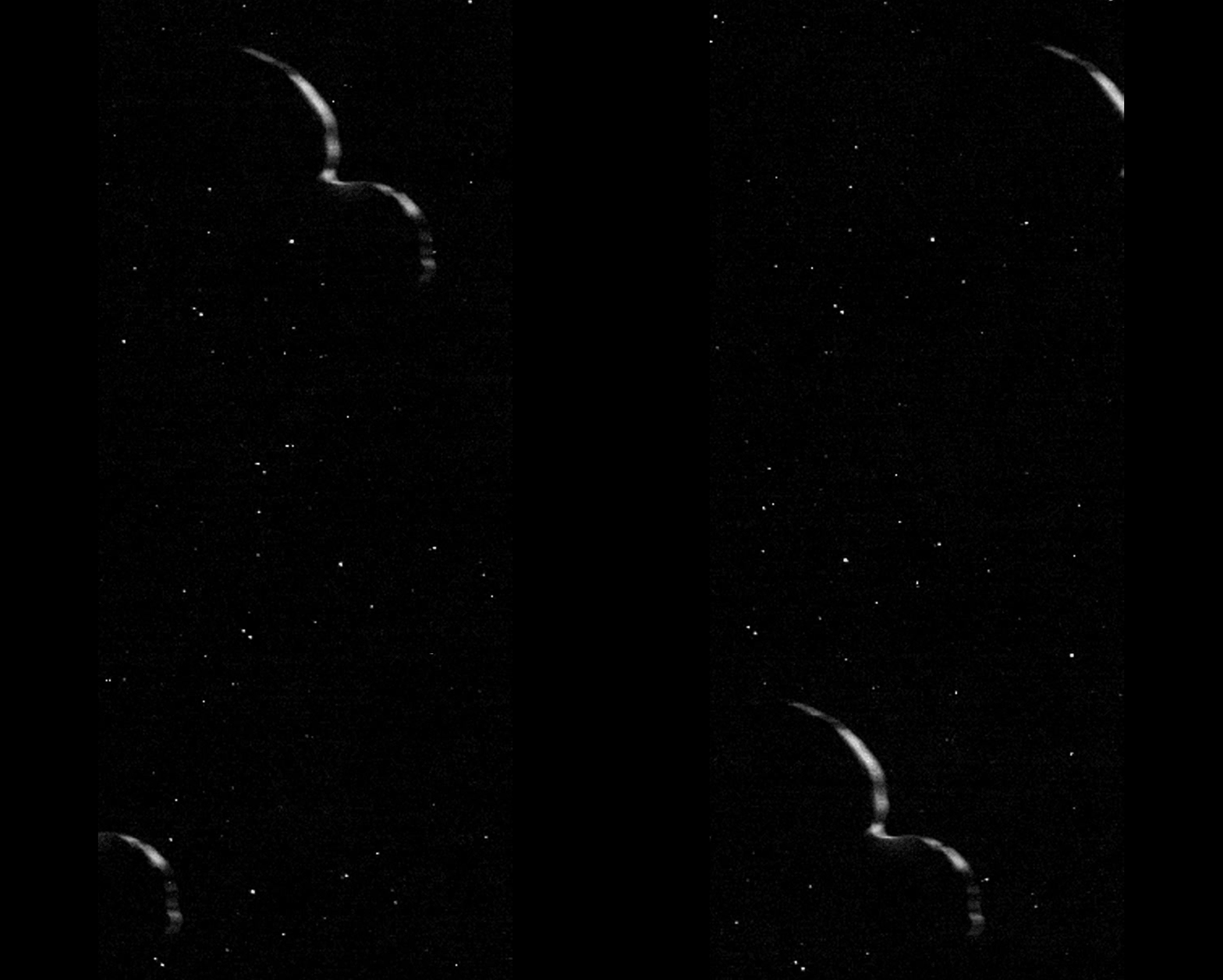
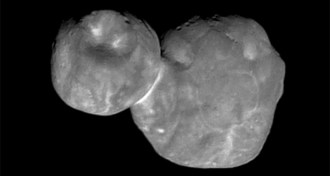
Ultima Thule is shaped like two lumpy pancakes
Scientists are rethinking the shape of the space rock, once thought to be a snowman.
- Planetary Science
A basketball-sized rock hit the moon during the last lunar eclipse
Professional and amateur astronomers joined forces to analyze the impact.
- Astronomy
A space rock collision may explain how this exoplanet was born
Simulations suggest a planet roughly 2,000 light-years away formed when two space rocks collided, supporting the idea that such events are universal.
- Planetary Science
Titan’s oddly thick atmosphere may come from cooked organic compounds
Saturn’s moon Titan might get some of its hazy atmosphere by baking organic molecules in a warm core.
- Planetary Science
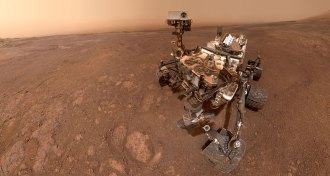
NASA’s Curiosity Mars rover weighed the mountain it’s climbing
Curiosity measures gravity as it drives, allowing scientists to weigh Mount Sharp and determine that the rock is less dense than expected.
- Planetary Science
The latest picture of Ultima Thule reveals a remarkably smooth face
Kuiper Belt object MU69, nicknamed Ultima Thule, is largely unmarred by impact craters, suggesting the Kuiper Belt might lack small objects.
- Space
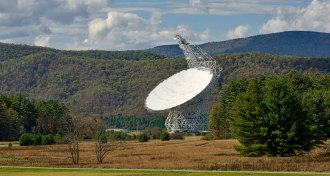
It’s time to start taking the search for E.T. seriously, astronomers say
Astronomers are hoping to make looking for alien technology an official science goal of NASA.