Planetary Science
- Planetary Science
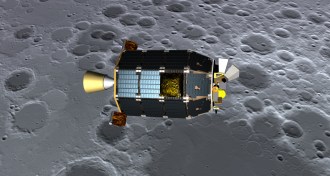
RIP LADEE: 9/6/2013 – 4/18/2014
NASA’s Lunar Atmosphere and Dust Environment Explorer (LADEE) mission ended April 18.
- Planetary Science
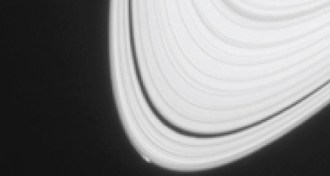
Saturn may be getting a new moon
An icy object within Saturn's rings may be a new moon in the making.
- Astronomy
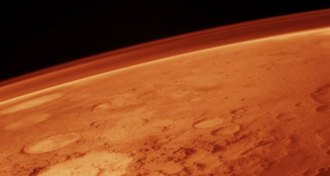
Early Mars couldn’t hold liquid water long
Small rocks hit Mars 3.6 billion years ago, suggesting an early atmosphere too thin for liquid water to hang around very long.
- Astronomy
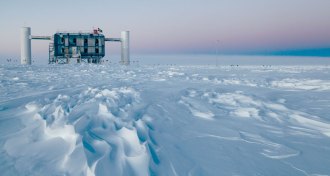
Neutrinos from space rain down from all directions
Using Earth as a filter, scientists detect thousands of neutrinos from beyond the solar system.
- Planetary Science
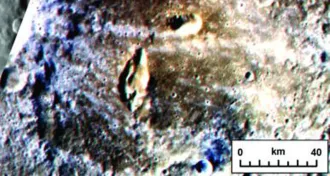
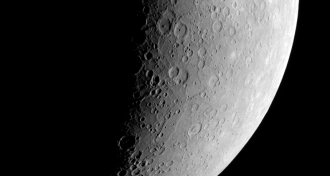
Mercury’s surface once exploded in volcanoes
Newly released images show ancient vents and ash scattered within craters on Mercury's surface.
- Planetary Science
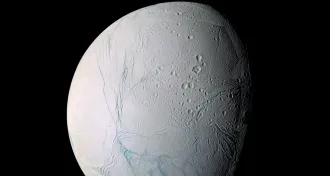
Subsurface sea hides below ice of Saturn moon
Astronomers add to evidence for a subsurface ocean on Enceladus using subtle variations in the moon’s gravity.
- Planetary Science
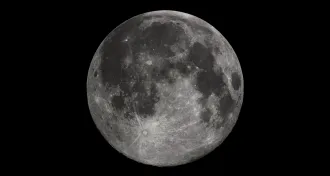
Moon gets younger age estimate
The moon may have formed about 95 million years after the birth of the solar system, up to 70 million years later than some scientists previously predicted.
- Planetary Science
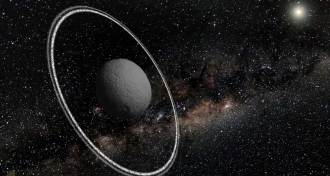
Icy rings found around tiny space rock
Astronomers discover an icy ring around the planetoid Chariklo, held in place by unseen moons.
- Planetary Science
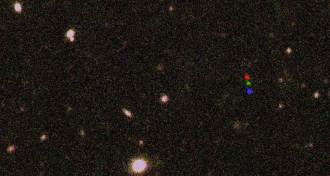
Icy planetoid found lurking at edge of solar system
Astronomers discovered an icy planetoid orbiting beyond the edge of the Kuiper belt.
- Planetary Science
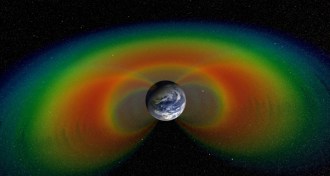
How Earth’s radiation belt gets its ‘stripes’
The rotation of the Earth may give the planet's inner radiation belt its zebralike stripes.
- Space
Exoplanet oxygen may not signal alien life
Oxygen in an exoplanet atmosphere may come from water and ultraviolet light, not alien life.
- Planetary Science
Mercury is more shriveled than originally thought
Like a week-old party balloon, Mercury has shrunk over the last 4.6 billion years.