Paleontology
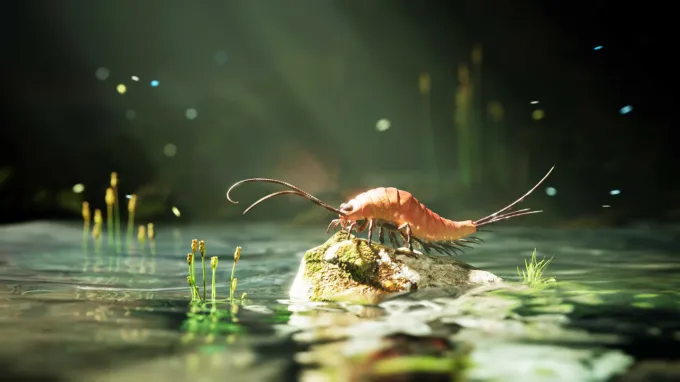
Once upon a time, insects had 24 legs
A many-legged oddball from long ago helps fill a major gap in the fossil record — and hints at how insects ended up with just six legs.
A many-legged oddball from long ago helps fill a major gap in the fossil record — and hints at how insects ended up with just six legs.
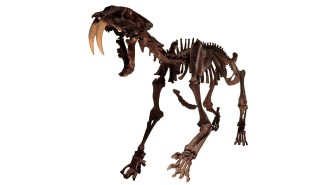
Remains pulled from the La Brea Tar Pits revealed deformed vertebrae and rare tumors, possible signs of inbreeding among now-extinct saber-toothed cats.
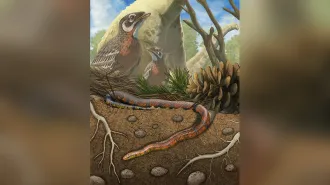
A new snake’s unique head anatomy suggests early snakes were even more diverse than thought. This one was a rare burrower.
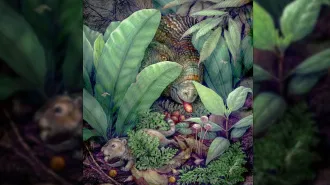
Scientists thought angiosperms didn’t use animals to spread seeds until after the Age of Dinosaurs. Fossilized fruits from these plants challenge this idea.
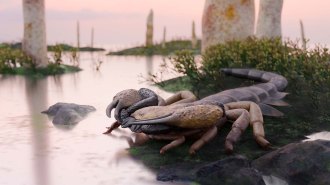
A prehistoric scorpion was the largest ever to exist, and it may have preyed on land and freshwater species.
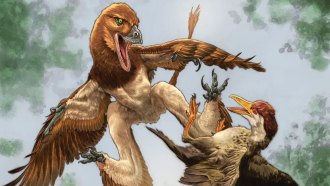
A newly-described dinosaur, Jian changmaensis, may have glided through northwestern China about 120 million years ago, wreaking havoc on birds.
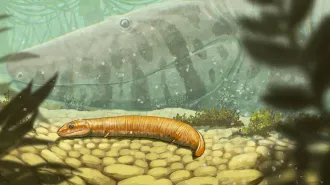
Three species that lived about 308 million years ago challenge the idea that the first land vertebrates underwent amphibian-like metamorphosis.
DNA preserved in ancient scat reveals what Yukon ground squirrels ate and what animals shared their world.
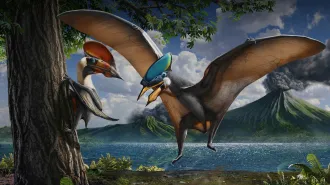
A new analysis of a 120-million-year-old fossil suggests at least one pterosaur species shimmered in iridescent greens and magentas.
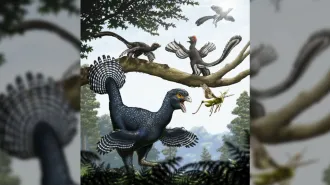
Scientists use simulated dinosaurs to trigger real insect brains and test how wings originally evolved.