Paleontology
- Paleontology
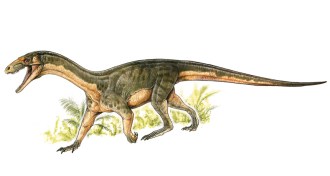
Early dinosaur relative sported odd mix of bird, crocodile-like traits
Teleocrater rhadinus gives researchers a better picture of what early dinosaur relatives looked like.
- Paleontology
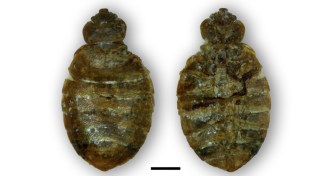
Bedbugs bugged prehistoric humans, too
Scientists have found the oldest known specimens of bedbug relatives in an Oregon cave system where ancient humans once lived.
- Science & Society
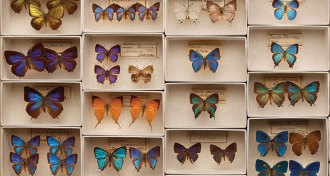
‘Specimens’ goes behind the scenes of Chicago’s Field Museum
The Field Museum of Natural History in Chicago puts seldom-seen specimens on display in a new exhibit to highlight the crucial role of museum objects in scientific research.
- Paleontology
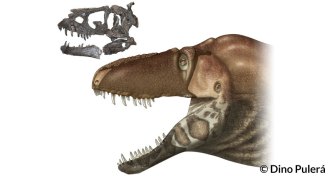
New tyrannosaur had a sensitive side
Tyrannosaurs may have had sensitive snouts that detected temperature and touch.
- Paleontology
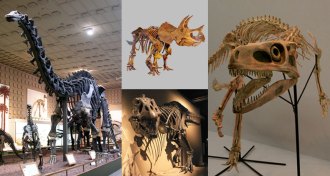
Anatomy analysis suggests new dinosaur family tree
A new analysis rewrites the dinosaur family tree, splitting up long-recognized groups.
- Paleontology
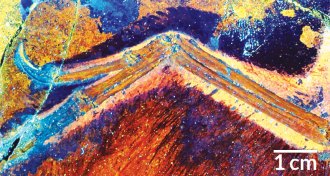
Under lasers, a feathered dino shows some skin
Laser-stimulated fluorescence reveals detailed images of soft tissue in a feathered dinosaur from 160 million years ago.
- Paleontology
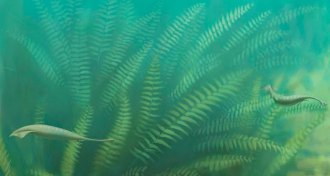
Identity of ‘Tully monster’ still a mystery
Paleontologists challenge whether the Tully monster actually was a vertebrate because it lacks key vertebrate structures.
- Paleontology
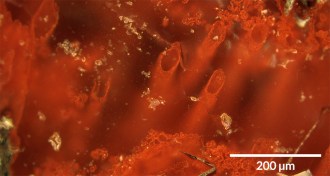
Oldest microfossils suggest life thrived on Earth about 4 billion years ago
A new claim for the oldest microfossils on Earth suggests that life may have originated in hydrothermal vents, but some scientists have doubts.
- Paleontology
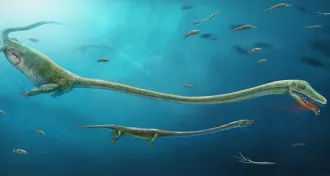
Fossil shows that ancient reptile gave live birth
A new fossil shows that a prehistoric reptile may have given birth to live young, unlike its egg-laying descendants, birds and crocodiles.
- Life
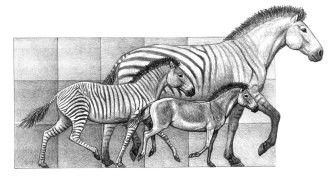
Horses buck evolutionary ideas
Horse evolution doesn’t fit classic scenario of trait evolution.
- Paleontology
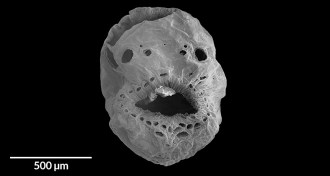
Pinhead-sized sea creature was a bag with a mouth
Dozens of tiny fossils discovered in 540-million-year-old limestone represent the earliest known deuterostomes, a diverse group of animals that includes humans and sea cucumbers.
- Animals
Endings make way for new beginnings for Earth and SN
Editor in chief Eva Emerson discusses major changes for life on Earth and at Science News.