Paleontology
- Paleontology
Like sea stars, ancient echinoderms nibbled with tiny tube feet
An ancient echinoderm fossil preserves evidence of tube feet like those found on today’s sea stars.
- Paleontology
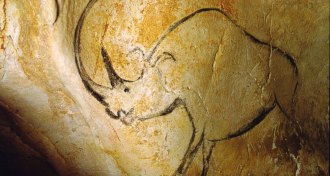
Woolly rhinos may have grown strange extra ribs before going extinct
Ribs attached to neck bones could have signaled trouble for woolly rhinos, a new study suggests.
- Paleontology
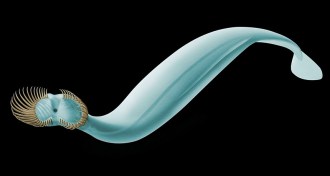
This ancient sea worm sported a crowd of ‘claws’ around its mouth
A newly discovered species of arrow worm that lived over half a billion years ago had about twice as many head spines as its modern kin.
- Anthropology
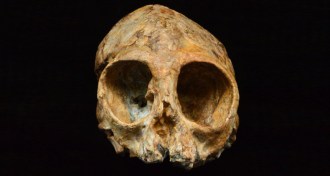
Infant ape’s tiny skull could have a big impact on ape evolution
Fossil comes from a lineage that had ties to the ancestor of modern apes and humans, researchers argue.
- Animals
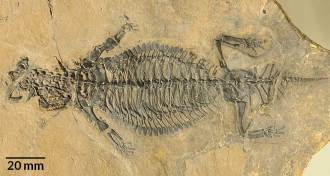
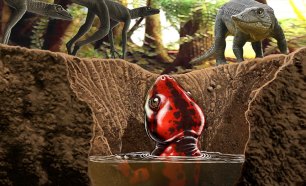
Fossil find suggests this ancient reptile lurked on land, not in the water
An exquisitely preserved fossil shows that an ancient armored reptile called Eusaurosphargis dalsassoi wasn’t aquatic, as scientists had suspected.
- Paleontology
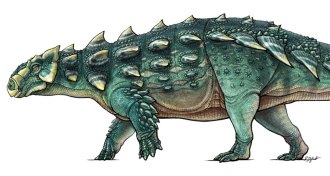
Giant armored dinosaur may have cloaked itself in camouflage
An armored dinosaur the size of a Honda Civic also wore countershading camouflage, a chemical analysis of its skin suggests.
- Paleontology
New fossils shake up history of amphibians with no legs
The oldest near-relative of today’s snake-shaped caecilians could have an unexpected backstory.
- Paleontology
Ancient attack marks show ocean predators got scarier
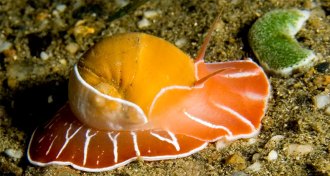
Killer snails and other ocean predators that drill through shells have grown bigger over evolutionary time.
- Paleontology
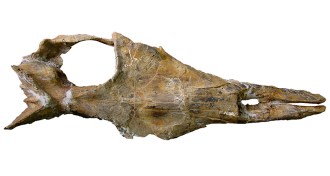
New dinosaur resurrects a demon from Ghostbusters
The most complete skeleton of an ankylosaur shows an armored, club-tailed dinosaur with a head like a Ghostbusters demon.
- Paleontology
Primitive whales had mediocre hearing
Fossils suggest that early whale hearing was run-of-the-mill, along the same line as that of land mammals.
- Paleontology
Sea scorpions slashed victims with swordlike tails
Ancient sea scorpion used a flexible, swordlike tail to hack at prey and defend against predators.
- Paleontology
Ancient whale tells tale of when baleen whales had teeth
A 36 million-year-old whale fossil bridges the gap between ancient toothy predators and modern filter-feeding baleen whales.