Paleontology
- Paleontology
Paleontologists have ID’d the world’s biggest known dinosaur foot
Bigfoot has been found in Wyoming. It’s not a hairy, apelike creature; it’s a dinosaur.
- Animals
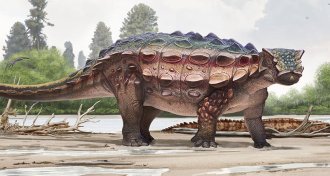
A new ankylosaur found in Utah had a surprisingly bumpy head
The spiky, fossilized skull of a newly discovered dinosaur species may be a road map to its ancestors’ journey to North America.
- Paleontology
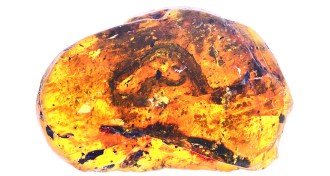
This amber nugget from Myanmar holds the first known baby snake fossil
Amber preserves the delicate bone structure of a 99 million year old baby snake.
- Paleontology
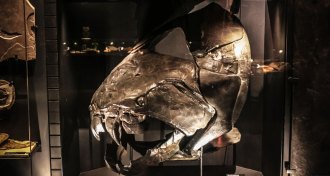
An ancient swimming revolution in the oceans may have never happened
Swimmers may not have suddenly dominated the oceans during the Devonian Period after all: New analyses suggest they took over much more gradually.
- Paleontology
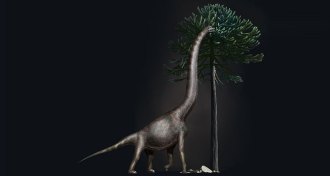
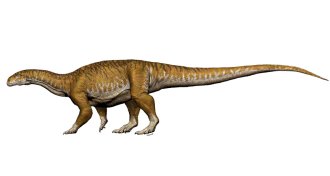
Long-necked dinosaurs grew to be giants in more ways than one
Some early relatives of giant, long-necked sauropods may have used a different strategy to grow to colossal sizes than previously thought.
- Animals
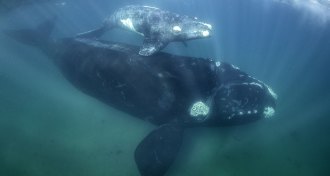
‘Spying on Whales’ dives into the story of true leviathans
"Spying on Whales" retraces the evolution of cetaceans, explaining how they came to be some of Earth’s largest creatures.
- Climate
Why won’t this debate about an ancient cold snap die?
Critics are still unconvinced that a comet caused a mysterious cold snap 12,800 years ago.
- Paleontology
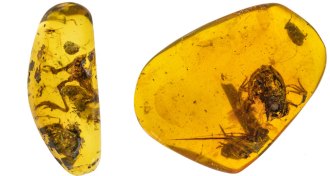
These newfound frogs have been trapped in amber for 99 million years
Trapped in amber, 99-million-year-old frog fossils reveal the amphibians lived in a wet, tropical climate.
- Paleontology
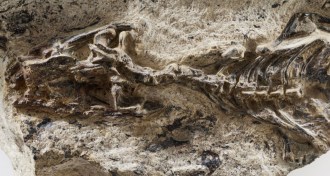
Oldest known lizard fossil pushes group’s origins back 75 million years
CT scan reveals hidden identity of an unusual lizard fossil found years ago in the Italian Alps.
- Life
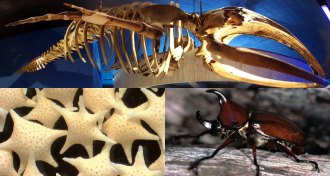
Skeletons come in many shapes and sizes
In Skeletons, two paleobiologists recount how and why skeletons evolved, as well as the variety of forms they take and the many purposes they serve.
- Paleontology
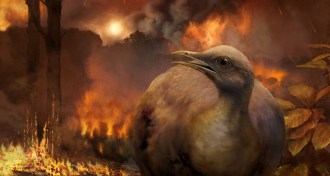
How birds may have escaped the dino-killing asteroid impact
A tree-loving lifestyle became a risk for ancient birds in a world-changing catastrophe.
- Paleontology
The Chicxulub asteroid impact might have set off 100,000 years of global warming
About 66 million years ago, the Chicxulub asteroid impact set off 100,000 years of global warming, an analysis of oxygen in fish fossils suggests.