Neuroscience
- Neuroscience
With good timing, experiences can rewire old brains
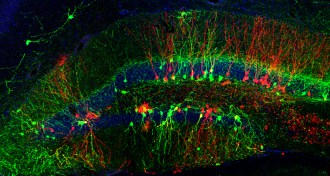
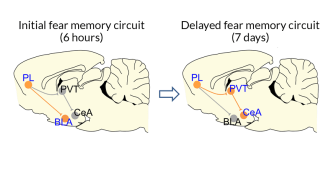
New experiences can rewire old brains — but the timing has to be just right.
- Neuroscience
How the brain sees follow-through
The follow-through on your golf swing is more than just a way to use up extra energy. It’s part of how your brain “sees” a movement.
- Humans
Baby brains undergo dramatic changes in utero
Developing human brains experience more than 28,000 changes in a molecular process that governs gene activity.
- Neuroscience
Chicks show left-to-right number bias
Recently hatched chicks may have their own version of the left-to-right mental number line.
- Neuroscience
Newly identified brain circuit could be target for treating obesity
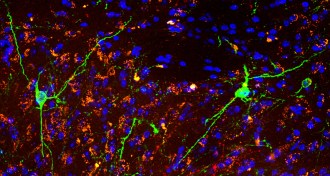
In mice, specific nerve cells control compulsive sugar consumption, but not normal feeding, hinting at a new therapeutic target for treating obesity.
- Science & Society
Smell circuitry, stalled stem cells and more reader feedback
Readers discuss a journal's publishing practices, ask about the human sense of smell and weigh in on their favorite picks from our Top 25 stories of the year.
- Neuroscience
Immune system may remember and adapt to stress
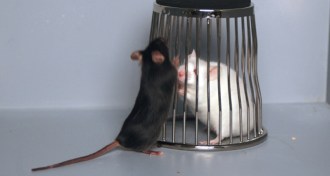
Mice without immune systems who receive stressed immune cells are less anxious and more social, suggesting that the immune system can adapt to stress.
- Neuroscience
Two sets of neurons turn thirst on and off
A study in mice reveals that two neural groups in the hypothalamus drive the body’s need to quench or not to quench.
- Neuroscience
Decoding sommeliers’ brains, one squirt of wine at a time
Researchers use a ‘gustometer’ to control wine portions in experiments comparing the brains of sommeliers and novices.
- Neuroscience
Brain’s protective barrier gets leakier with age
Aging influences the breakdown of the blood-brain barrier, which may contribute to learning and memory problems later in life.
- Health & Medicine
Immune system ‘reset’ may give MS patients a new lease on life
With the help of their own stem cells, MS patients can stop the disease in its tracks in many cases.
- Neuroscience
Newly identified brain circuit hints at how fear memories are made
A newfound set of brain connections appears to control fear memories, a finding that may lead to a better understanding of PTSD and other anxiety disorders.