Life
We summarize the week's scientific breakthroughs every Thursday.
- Life
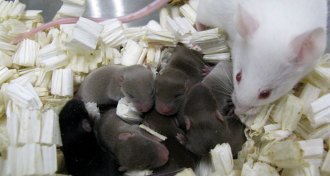
Mouse sperm survive space to spawn
Sperm freeze-dried and sent into space for months of exposure to high levels of solar radiation later produced healthy baby mice.
- Genetics
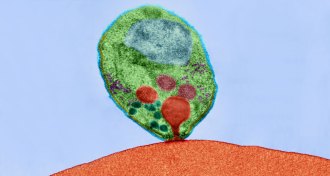
Hybrid protein offers malaria protection
Rare hybrid protein that spans red blood cell membranes offers some protection against malaria.
- Health & Medicine
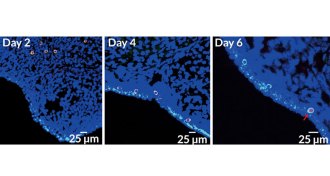
Transplanted stem cells become eggs in sterile mice
Sterile mice that received transplanted egg-making stem cells were able to have healthy babies.
- Animals
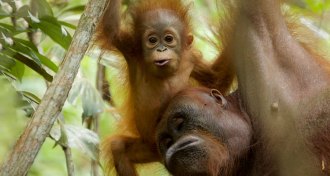
Orangutans take motherhood to extremes, nursing young for more than eight years
Weaning in orangutans has been tricky to see in the wild, so researchers turned to dental tests to reveal long nursing period.
- Life
Jumping genes are part of all that makes us human
Ask 10 people what makes humans human and you’ll probably get 10 different answers — and then some.
- Climate
Higher temperatures could trigger an uptick in damselfly cannibalism
Experiments in the lab suggest that increases in temperature could indirectly lead to an increase in cannibalistic damselfly nymphs.
- Animals
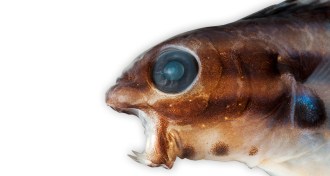
Blennies have a lot of fang for such little fishes
Unlike snakes, blennies evolved fangs before venom, through probably not because of any need to hunt big prey.
- Genetics
Jumping genes play a big role in what makes us human
Jumping genes have been a powerful force in human evolution.
- Animals
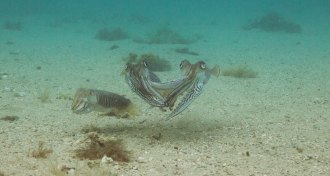
Watch male cuttlefish fight over a female in the wild
For the first time, researchers have observed the competitive mating behaviors of the European cuttlefish in the field.
- Genetics
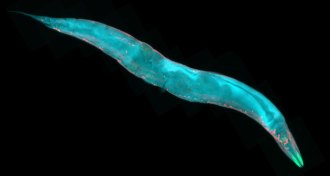
Selfish genes hide for decades in plain sight of worm geneticists
Crossing wild Hawaiian C. elegans with the familiar lab strain reveals genes that benefit themselves by making mother worms poison offspring who haven’t inherited the right stuff.
- Paleontology
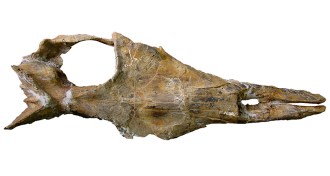
Ancient whale tells tale of when baleen whales had teeth
A 36 million-year-old whale fossil bridges the gap between ancient toothy predators and modern filter-feeding baleen whales.
- Animals
Why create a model of mammal defecation? Because everyone poops
Mammals that defecate in the same fashion as humans all excrete waste within the same time frame, no matter their size, a new study finds.