Life
We summarize the week's scientific breakthroughs every Thursday.
- Neuroscience
Gene variant linked to Alzheimer’s disease is a triple threat
A genetic risk factor for Alzheimer’s disease works on multiple aspects of the disease, researchers report.
- Paleontology
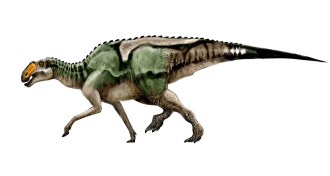
Shhhh! Some plant-eating dinos snacked on crunchy critters
Scientists studying dinosaur poop found that some duck-billed dinos cheated on their vegetarian diets by snacking on crustaceans.
- Animals
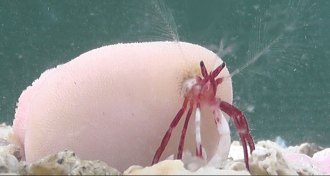
This newfound hermit crab finds shelter in corals, not shells
A newly discovered hermit crab takes its cue from peanut worms and uses walking corals as a permanent shelter.
- Health & Medicine
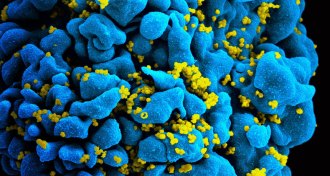
By ganging up, HIV antibodies may defeat the virus
A duo or trio of powerful antibodies was effective at stopping an HIV-like infection in lab monkeys, two studies find.
- Genetics
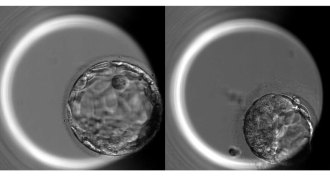
In a first, human embryos edited to explore gene function
In groundbreaking research, CRISPR/Cas9 used to study human development for the first time.
- Tech
Nature offers inspiration, and occasionally courage
Acting Editor in Chief Elizabeth Quill discusses how nature can inspire people to make long-lasting change.
- Animals
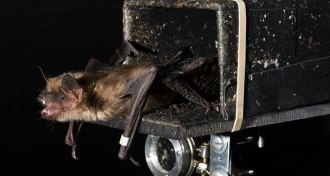
Bat brain signals illuminate navigation in the dark
New lab technologies that let bats fly freely allow scientists to track nerve cell signals as the animals dodge and weave.
- Animals
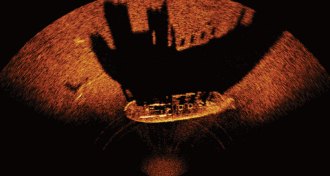
How bats could help tomato farmers (and the U.S. Navy)
The way bats navigate their environs inspires engineers to develop better sonar and robots that can estimate crop yield or deliver packages
- Animals
Old barn owls aren’t hard of hearing
A new study suggests that older barn owls hear just as well as younger ones.
- Life
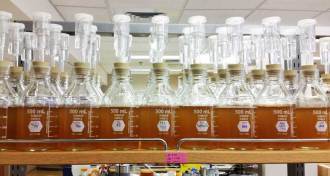
This biochemist brews a wild beer
Wild beer studies are teaching scientists and brewers about the tropical fruit smell and sour taste of success.
- Microbes
Now we know how much glacial melting ‘watermelon snow’ can cause
Algae that give snow a red tint are making glacial snow in Alaska melt faster.
- Animals
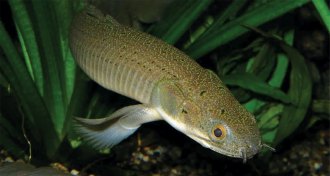
3-D scans of fossils suggest new fish family tree
Analysis of specimens from China implies ray-finned fishes evolved later than previously thought.