Humans
We summarize the week's scientific breakthroughs every Thursday.
- Anthropology
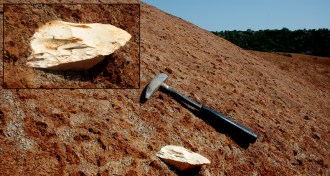
Ancient hominids moved into Greece about 206,000 years ago
New analysis puts people at a contested Greek site about 206,000 years ago.
- Microbes
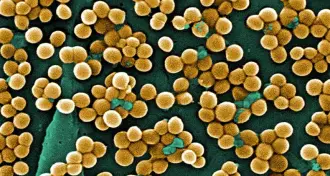
Some superbugs lurk in Britain’s surf
In Great Britain’s coastal waters, surfers and swimmers are exposed to low levels of drug-resistant E. coli, a new study finds.
- Humans
Egg-meet-sperm moments are equal opportunities for girls and boys
Despite previous claims, equal numbers of male and female embryos are conceived, new data suggest.
- Health & Medicine
Performance gains from Tommy John surgery still up for debate
Major league baseball pitchers who undergo two Tommy John surgeries have shorter careers than peers who don’t have the surgery, a new study finds.
- Science & Society
White House unveils strategy against antibiotic resistance
The Obama Administration has launched a long-term plan to curb antibiotic resistance, unveiling incentives and requirements designed to boost surveillance and diagnosis of resistant microbes.
- Psychology
Long-term study complicates understanding of child abuse
Sexual abuse and neglect get reported more if parents were maltreated as kids, which may lead authorities to overestimate some children’s risk of abuse.
- Genetics
Iceland lays bare its genomes
A detailed genetic portrait of the Icelandic population is helping scientists to identify the genetic underpinnings of disease.
- Psychology
Rethinking light’s speed, helping young adults with autism and more reader feedback
Readers discuss the best ways to replicate findings in scientific studies, help teenagers with autism transition to adulthood, and more.
- Chemistry
Air pollution molecules make key immune protein go haywire
Reactive molecules in air pollution derail immune responses in the lung and can trigger life-long asthma.
- Astronomy
What’s in a name? In science, a lot
Classification systems are essential to science. But any classification system, however useful, is ultimately simplistic.
- Health & Medicine
Clean-up gene gone awry can cause Lou Gehrig’s disease
Scientists have linked mutations on a gene involved in inflammation and cell cleanup to ALS, or Lou Gehrig’s disease.
- Chemistry
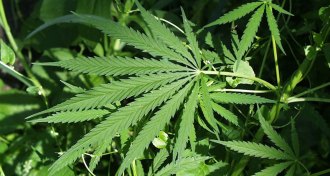
Today’s pot is more potent, less therapeutic
The medicinal qualities of marijuana may be up in smoke thanks to years of cross-breeding plants for a better buzz.