Humans
We summarize the week's scientific breakthroughs every Thursday.
- Health & Medicine
How farm life can prevent allergies
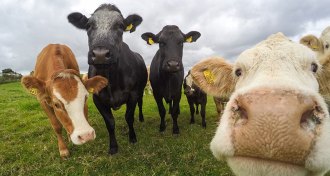
Farm dust prevents allergies by turning on an anti-inflammatory enzyme in the cells lining mice’s lungs.
- Science & Society
Why enforced ‘service with a smile’ should be banned
If management wants workers to maintain false cheer, those workers should be trained, supported and compensated for the emotional labor, a new review suggests.
- Anthropology
Ancient pottery maps route to South Pacific
New Guinea pottery points to a key meeting of island natives and seafarers at least 3,000 years ago.
- Health & Medicine
Microbes make the meal, new diet book proposes
Researcher Tim Spector skewers conventional thinking about weight loss in ‘The Diet Myth’
- Materials Science
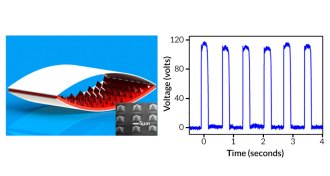
Nanogenerators harvest body’s energy to power devices
Nanogenerators offer body-harvested energy to fuel bionic future
- Neuroscience
The need to feed and eating for pleasure are inextricably linked
Scientists used to think that the hunger and the pleasure from food could be easily distinguished. But new results show these systems are inextricably intertwined.
- Health & Medicine
Vaccinated man excretes live poliovirus for nearly 3 decades
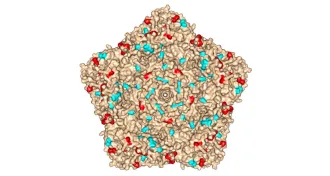
For almost 30 years, a man with an immune deficiency has been shedding poliovirus strains that have evolved from the version he received in a vaccine.
- Psychology
Psychology results evaporate upon further review
Less than half of psychology findings get reproduced on second tries, a study finds.
- Health & Medicine
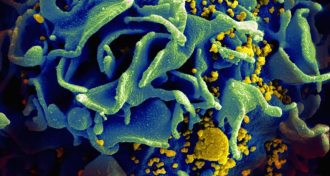
Earlier is better for HIV treatment
People infected with HIV benefit from starting a drug regimen early, an international study finds.
- Humans
Moon bounces, bad spider leaders and more reader feedback
Readers debate faith's role in evolution, compare politicians to spiders and more.
- Health & Medicine
Blood test can predict breast cancer relapse
Blood tests for breast cancer DNA can predict relapse.
- Health & Medicine
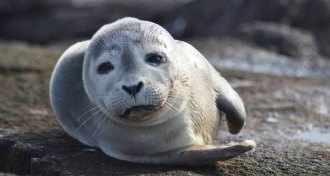
Virus closely related to hepatitis A discovered in seals
Scientists have discovered a relative of the hepatitis A virus in seals.