Humans
We summarize the week's scientific breakthroughs every Thursday.
- Psychology
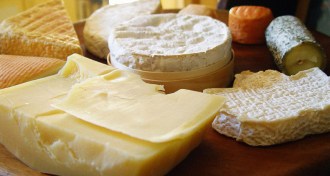
No, cheese is not just like crack
Recent news reports claimed that a study shows cheese is addictive. But the facts behind the research show cheese and crack have little in common.
- Anthropology
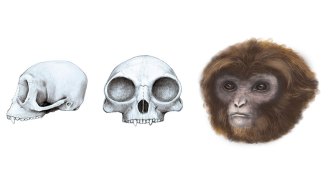
Petite primate fossil could upend ideas about ape evolution
Ancient fossils suggest modern apes descended from a small, gibbonlike creature.
- Anthropology
Synchronized dancing boosts pain tolerance
Dancing in sync to high energy routines increase pain tolerance and helps people bond as a group, a study suggests.
- Health & Medicine
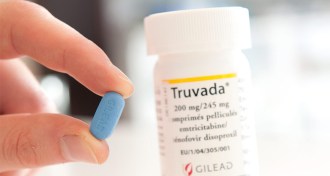
Daily drug shown effective in preventing HIV infections
After a history of controversy, preexposure prophylaxis has been demonstrated to work for HIV prevention.
- Health & Medicine
Eating meat officially raises cancer risk
Eating processed meats like bacon, ham and sausage causes cancer, says the World Health Organization.
- Psychology
Views on bias can be biased
When presented with a study showing bias against women, male scientists are more inclined to nitpick the results. But a little intervention can go a long way toward gender equality in science.
- Neuroscience
Signs of Alzheimer’s seen in young brain’s GPS cells
Signs of Alzheimer’s can show up in the brain’s compass decades before symptoms strike.
- Anthropology
Plagues plagued the Bronze Age
Ancient bacterial DNA provides first clues to Bronze Age plagues in Europe and Asia.
- Health & Medicine
Hollywood-made science documentary series comes to TV
Breakthrough series gives a closer look at scientists at work.
- Neuroscience
Signs of Huntington’s show up in the brain in childhood
Hints of Huntington’s disease show up in the brain long before symptoms do.
-
- Chemistry
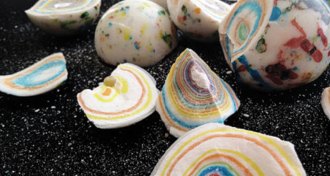
Nanoparticles in foods raise safety questions
As scientists cook up ways to improve palatability and even make foods healthier, some are considering the potential health risks of tiny additives.