Humans
We summarize the week's scientific breakthroughs every Thursday.
- Archaeology
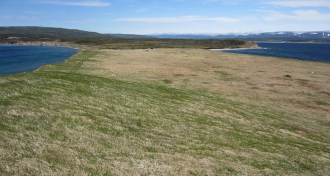
Possible second Viking site found in Newfoundland
Newfoundland excavation reveals possible Norse settlement.
- Science & Society
Pulling ‘Vaxxed’ still doesn’t retract vaccine misconceptions
The Tribeca Film Festival’s decision to cancel its screening of an antivaccination film has been lauded as a win for science, but irrationality already won.
- Health & Medicine
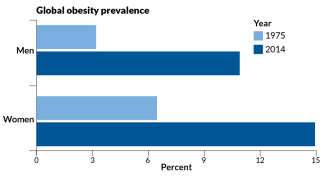
Global obesity rates continue to climb
Despite public health campaigns, the worldwide prevalence of obesity is on the rise, an analysis of BMI data suggest.
- Health & Medicine
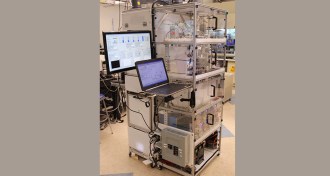
Machine makes drugs on demand
A new drug-making system rapidly produces a variety of medications on demand.
- Health & Medicine
Fridge-sized contraption makes drugs on demand
A new drug-making system rapidly produces a variety of medications on demand.
- Neuroscience
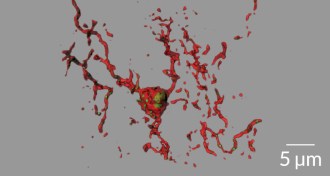
Nerve cell links severed in early stages of Alzheimer’s
Nerve cell connections may be trimmed too much in early stages of Alzheimer’s.
- Health & Medicine
Environment still tied to MS risk
50 years ago, scientists reported a possible connection between the environment and multiple sclerosis risk.
- Health & Medicine
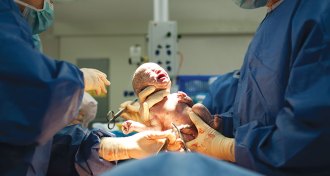
Should C-section babies get wiped down with vagina microbes?
A study suggests that a post-birth rubdown with vaginal fluid offers starter microbes to babies born by C-section. But it might not always be a good idea.
- Archaeology
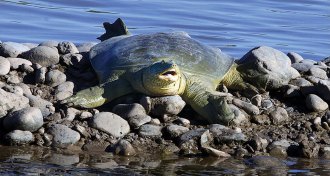
Ancient Assyrians buried their dead with turtles
Why did ancient Assyrians bury their dead with turtles? The reptiles may have served as symbolic protectors of the dead.
- Anthropology
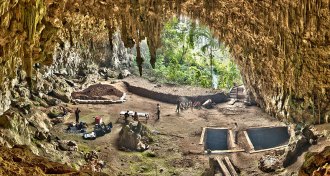
Hobbits died out earlier than thought
Tiny Indonesian hominids disappeared earlier than thought, around 50,000 years ago.
- Health & Medicine
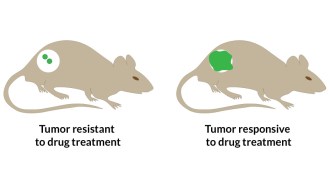
Cancer killers send signal of success
Newly designed nanoparticles deliver anticancer drugs and updates on tumor death.
- Genetics
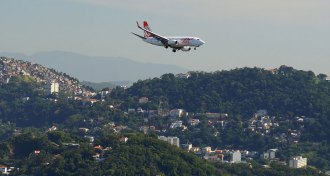
Zika may have flown to Brazil in 2013
The brand of Zika currently floating around the Americas traces its origins to Asia and may have arrived in Brazil by air as early as 2013.