Humans
We summarize the week's scientific breakthroughs every Thursday.
- Humans
50 years ago, folate deficiency was linked to birth defects
50 years ago, scientists found that a lack of folic acid in pregnant women could cause birth defects. But now, how much is too much?
- Neuroscience
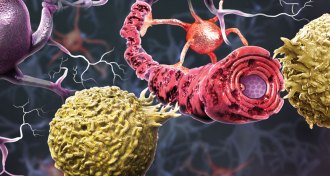
Scientists are seeking new strategies to fight multiple sclerosis
Facing so many unknowns about multiple sclerosis, researchers explore the immune system, the neurons and the gut to fight the disease.
- Anthropology
Strong-armed women helped power Europe’s ancient farming revolution
Intensive manual labor gave ancient farm women arms that female rowers today would envy.
- Health & Medicine
Testosterone may be one reason why men don’t get asthma as much as women
Adult women have higher rates of asthma than men, and testosterone’s effect on the immune system may partly explain that difference.
- Archaeology
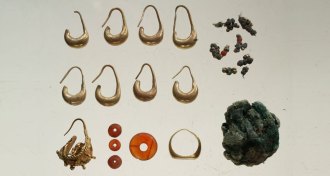
Hidden hoard hints at how ancient elites protected the family treasures
A secret stash at an ancient site in Israel called Megiddo illuminates the Iron Age practice of hoarding wealth.
- Health & Medicine
Step away from the cookie dough. E. coli outbreaks traced to raw flour
Flour, though low in moisture, can sicken people with E. coli toxins if it is eaten raw.
- Health & Medicine
Six-month-old babies know words for common things, but struggle with similar nouns
Young babies know a cup of juice from a car, but have a hard time distinguishing more similar nouns, a new study finds.
- Archaeology
Skeletons could provide clues to who wrote or protected the Dead Sea Scrolls
Skeletons suggest a group of celibate men inhabited Dead Sea Scrolls site.
- Health & Medicine
How dad’s stress changes his sperm
Stress may change sperm via packets of RNA in the epididymis, a mouse study suggests.
- Science & Society
Readers inspired by SN 10 scientists’ research
Readers wanted to know more about the scientists' research who were profiled in "The SN 10: Scientists to watch."
- Archaeology
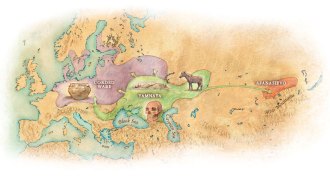
How Asian nomadic herders built new Bronze Age cultures
Ancient steppe herders traveled into Europe and Asia, leaving their molecular mark and building Bronze Age cultures.
- Health & Medicine
New blood pressure guidelines put half of U.S. adults in unhealthy range
New hypertension guidelines broaden the range of those considered to have high blood pressure and emphasize lifestyle changes to combat the condition.