Health & Medicine
- Health & Medicine
Coronavirus is most contagious before and during the first week of symptoms
As major efforts to contain the COVID-19 pandemic go into effect around the globe, researchers are figuring out just when patients are most contagious.
- Health & Medicine
A trick from cancer cells helps rats accept transplanted limbs
Rats that received microparticles that release a chemical signal to recruit immune cells tolerated hind limb transplants for more than 200 days.
- Health & Medicine
Social distancing, not travel bans, is crucial to limiting coronavirus’ spread
Everything from waving hello instead of shaking hands to cancelling large gatherings of people will help slow the spread of COVID-19.
- Health & Medicine
Cruise ship outbreak helps pin down how deadly the new coronavirus is
Infections and deaths on the Diamond Princess suggest that, in the real world, 0.5 percent of COVID-19 infections in China end in death.
- Health & Medicine
What WHO calling the coronavirus outbreak a pandemic means
The world’s top global health organization is asking countries to double down on efforts to both contain the virus and mitigate its impact.
- Health & Medicine
Repurposed drugs may help scientists fight the new coronavirus
Work on similar viruses is giving researchers clues on how to begin developing drugs against the new disease.
- Health & Medicine
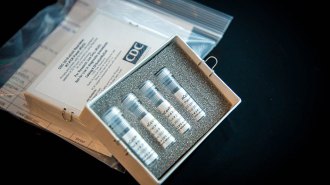
What you need to know about coronavirus testing in the U.S.
Testing for the new coronavirus is still limited but could ramp up soon, thanks in part to tests developed by state laboratories and companies.
- Health & Medicine
Travel bans have barely slowed the coronavirus’s spread
Travel restrictions in Wuhan and greater China have only modestly impacted the spread of the virus to other countries, researchers say.
- Health & Medicine
A dog in Hong Kong has a low-level infection of the new coronavirus
There’s currently no evidence that pets can actually get sick from the virus or pass it to people or other animals.
- Health & Medicine
Immune cells in the gut may play a big role in peanut allergies
A study finds loads of allergy-inducing cells in the stomachs and intestines of adults allergic to peanuts, but few in people without the condition.
- Health & Medicine
A more convenient, monthly treatment for HIV cleared a key hurdle
Two phase III clinical trials suggest that a once-a-month injection of antiretroviral drugs treats HIV just as well as daily pill regimes.
- Chemistry
Thirdhand smoke wafting off moviegoers hurts air quality in theaters
Nonsmoking theaters can still get exposed to cigarette-related pollutants carried in on audience members’ bodies and clothing.