Health & Medicine
- Neuroscience
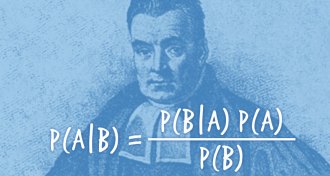
Bayesian reasoning implicated in some mental disorders
An 18th century math theory may offer new ways to understand schizophrenia, autism, anxiety and depression.
- Neuroscience
Brain waves in REM sleep help store memories
Mice with disturbed REM sleep show memory trouble.
- Health & Medicine
Early work on human growth hormone paved way for synthetic versions
In 1966, researchers reported the complete chemical structure of human growth hormone. Today synthetic growth hormone is used to treat growth hormone deficiency.
- Health & Medicine
Healthiest weight just might be ‘overweight’
The body mass index tied to lowest risk of death has risen since the 1970s. It now falls squarely in the “overweight” category.
- Health & Medicine
Mouse studies link Zika virus infection to microcephaly
Three new studies in mice shore up the link between microcephaly and Zika virus infection.
- Health & Medicine
This week in Zika: First mouse study proof that Zika causes microcephaly
Three new studies in mice shore up the link between microcephaly and Zika virus infection.
- Health & Medicine
Heartburn drugs can damage cells that line blood vessels
A type of heartburn drugs called proton pump inhibitors may damage cells that line the blood vessels. The results, though controversial, hint at an explanation for PPI’s link to serious side effects, including risk of dementia and heart attack.
- Environment
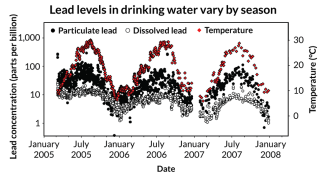
When measuring lead in water, check the temperature
Lead contamination in drinking water can be much higher during summer than winter, new research suggests.
- Health & Medicine
This week in Zika: An anniversary, how the virus kills brain cells and more
New weapons in the fight against Zika, how the virus shrinks minibrains, a quick paper-based test for Zika, and more in this week’s Zika Watch.
- Microbes
Leptospirosis bacterium still haunts swimming holes
Bacterial scourges lurk in warm recreational waters.
- Particle Physics
Readers ponder gravity wave physics
Gravitational waves, the benefits of fat and more reader feedback.
- Neuroscience
A breakdown product, not ketamine, may ease depression
Ketamine’s breakdown product, not the drug itself, eases depression, a mouse study suggests.