Health & Medicine
- Health & Medicine
Readers concerned about cancer’s sugary disguise
Tricky cancer cells, brain-shaping smartphones, a cow-burying badger and more in reader feedback.
- Health & Medicine
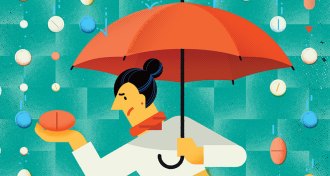
Yes, statins protect hearts. But critics question their expanding use
Even after decades of study, questions remain about statin safety.
- Health & Medicine
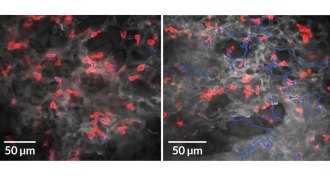
Lungs enlist immune cells to fight infections in capillaries
Immune cells in the lungs provide a rapid counterattack to bloodstream infections, a new study in mice finds.
- Neuroscience
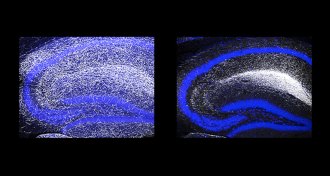
Nerve cell miswiring linked to depression
A gene helps nerve cell axons extend to parts of the brain to deliver serotonin, a brain chemical associated with depression.
- Science & Society
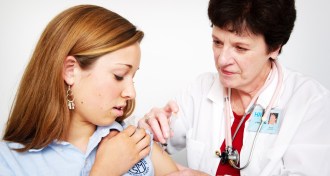
HPV vaccine as cancer prevention is a message that needs to catch on
Vaccination against HPV is cancer prevention, but low vaccination rates suggest that message isn’t clear.
- Health & Medicine
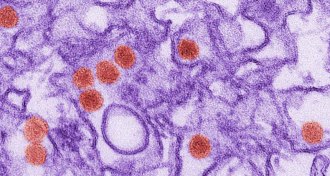
Zika hides out in body’s hard-to-reach spots
Zika virus sticks around in the central nervous system and lymph nodes of monkeys.
- Health & Medicine
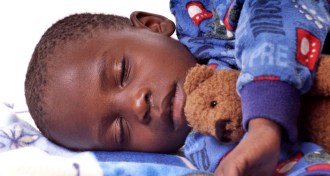
Long naps lead to less night sleep for toddlers
Daytime naps can steal sleep from the night, a small study of toddlers suggests.
- Health & Medicine
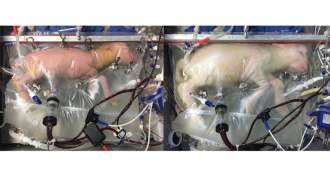
Faux womb keeps preemie lambs alive
A device can keep premature lambs alive for a month in womblike conditions.
- Health & Medicine
Evidence is lacking that ‘cocooning’ prevents whooping cough in newborns
In general, vaccinating adults who come into close contact with newborns is a good idea, but the practice on its own may not keep whooping cough away.
- Health & Medicine
Frog slime protein fights off the flu
Urumin, a protein found in Indian frog mucus secretions, has a knack for taking down H1 flu viruses, a new study finds.
- Health & Medicine
Frog slime protein fights off the flu
Urumin, a protein found in Indian frog mucus secretions, has a knack for taking down H1 flu viruses, a new study finds.
- Health & Medicine
Autism, ADHD risk not linked to prenatal exposure to antidepressants
Taking antidepressants during pregnancy does not increase the risk of autism or attention-deficit/hyperactivity disorder, two new large studies suggest.