Earth
We summarize the week's scientific breakthroughs every Thursday.
- Earth
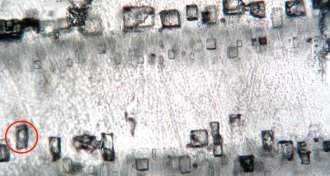
Ancient air bubbles could revise history of Earth’s oxygen
Pockets of ancient air trapped in rock salt for around 815 million years suggest that oxygen was abundant well before the first animals appear in the fossil record.
- Earth
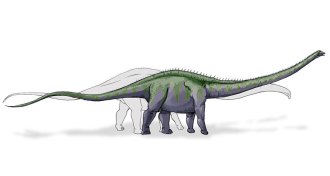
How dinosaurs hopped across an ocean
Land bridges may have once allowed dinosaurs and other animals to travel between North America and Europe around 150 million years ago, a researcher proposes.
- Climate
Phytoplankton’s response to climate change has its ups and downs
In a four-year experiment, the shell-building activities of a phytoplankton species underwent surprising ups and downs.
- Oceans
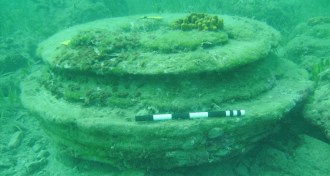
Underwater city was built by microbes, not people
Submerged stoneworklike formations near the Greek island of Zakynthos were built by methane-munching microbes, not ancient Greeks.
- Animals
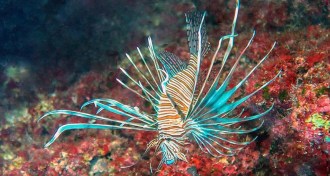
Lionfish invasion comes to the Mediterranean
Scientists had thought that the Mediterranean was too cold for lionfish to permanently settle there. But now they’ve found a population of the fish off Cyprus.
- Chemistry
Nuclear bomb debris can reveal blast size, even decades later
Measuring the relative abundance of various elements in debris left over from nuclear bomb tests can reveal the energy released in the initial blast, researchers report.
- Climate
Warming alters mountain plant’s sex ratios
Global warming has different effects on male and female plants. Tracking sex ratio shifts could be a fast signal of climate change, researchers say.
- Climate
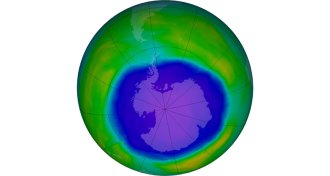
Despite volcanic setback, Antarctic ozone hole healing
The September extent of the Antarctic ozone hole has shrunk by about 4.5 million square kilometers since 2000, thanks in large part to the Montreal Protocol.
- Climate
World will struggle to keep warming to 2 degrees by 2100
Current plans to curb climate change aren’t ambitious enough to limit global warming below 2 degrees Celsius by 2100, new research shows.
- Earth
Winning helium hunt lifts hopes element not running out
A volcanic region of Tanzania contains more than a trillion liters of helium gas, enough to fill 1.2 million medical MRI scanners — or hundreds of billions of balloons, researchers report.
- Oceans
Coral bleaching event is longest on record
Widespread coral bleaching continues, in the longest episode, over the largest area to date.
- Oceans
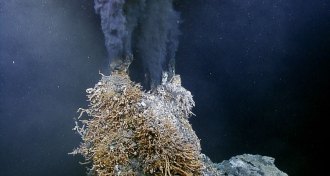
Deep-sea hydrothermal vents more abundant than thought
Ecosystem-supporting hydrothermal vents are much more abundant along the ocean floor than previously thought.