Earth
We summarize the week's scientific breakthroughs every Thursday.
- Climate
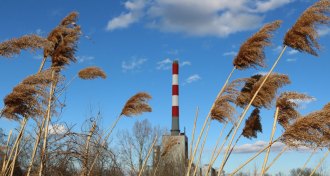
CO2-loving plants can counter human emissions
Plants temporarily halted the acceleration of rising carbon dioxide levels in the atmosphere, new research suggests.
- Climate
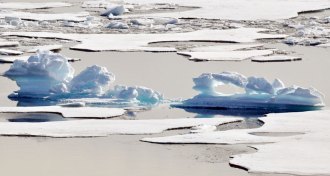
Human CO2 emissions put Arctic on track to be ice-free by 2050
Sea ice is shrinking by about three square meters for each metric ton of carbon dioxide emitted, new research suggests.
- Earth
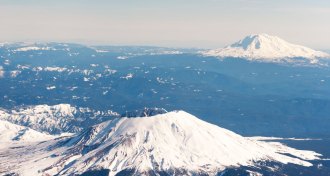
Mount St. Helens is a cold-hearted volcano
Geophysics reveals that deep beneath Mount St. Helens, there’s no source of hot magma, just a wedge of cold serpentinite rock. Where is the missing heat?
- Earth
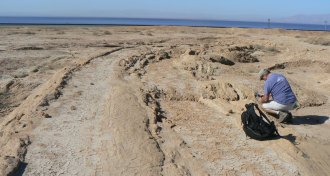
The southern San Andreas has a smaller, neighboring fault to its west
The newly-discovered Salton Trough Fault runs parallel to the southern San Andreas Fault in California, potentially affecting the region’s earthquake risk.
- Earth
‘A Most Improbable Journey’ offers scientific take on human history
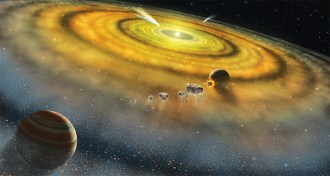
Walter Alvarez’s “A Most Improbable Journey” gives readers a tour of “Big History,” linking human history to unpredictable cosmic, geologic and biological events.
- Climate
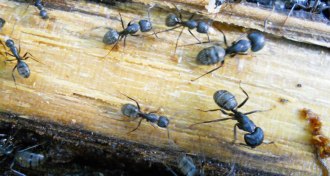
Climate change shifts how long ants hang on to coveted real estate
Simulated climate warming reveals a new pattern in turnover of ant nests.
- Climate
Wanted: New ways to chill air conditioners, fridges
A new amendment to the Montreal Protocol will phase out potent greenhouse gases currently used in air conditioners and refrigerators, prompting a hunt for eco-friendly alternatives.
-
- Earth
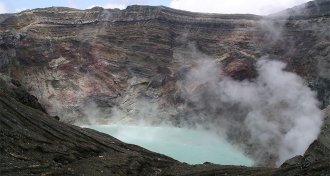
There’s a new way to stop an earthquake: put a volcano in its path
An earthquake rupturing along a fault in Japan was blockaded by the magma chamber below the Mount Aso volcano, researchers propose.
- Oceans
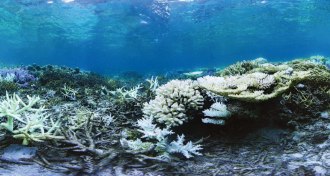
Reef rehab could help threatened corals make a comeback
Reefs are under threat from rising ocean temperatures. Directed spawning, microfragmenting and selective breeding may help.
- Climate
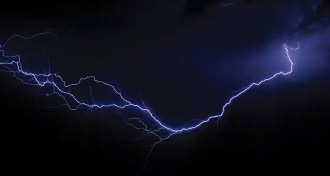
Extreme lightning events set records
A lightning flash stretching 321 kilometers across and one that lasted 7.74 seconds have been named the most extreme events on record, thanks to a new rule change.
- Life
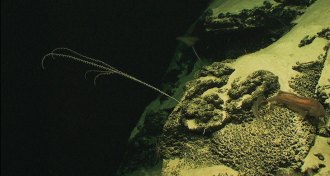
Ocean archaea more vulnerable to deep-sea viruses than bacteria
Deep-sea viruses kill archaea disproportionately more often than bacteria, a killing spree with important impacts on the global carbon cycle.