Archaeology
We’ve had fire for longer than we thought
Archaeologists have unearthed new evidence that indicates hominids used fire up to 1.79 million years ago.
Archaeologists have unearthed new evidence that indicates hominids used fire up to 1.79 million years ago.
Differences in how the pyramid and surrounding soil vibrate, along with design choices, have protected the structure from earthquakes.
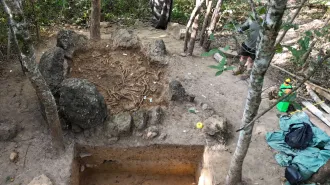
The remains of at least 37 people in an ancient stone 'jar' in northeastern Laos suggest that thousands similar jars were used in burials.
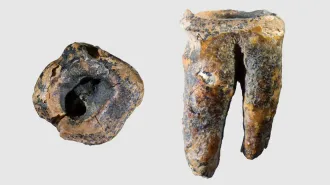
A 59,000-year-old Neandertal molar unearthed in Siberia was drilled with a stone tool – the earliest evidence of primitive dentistry.
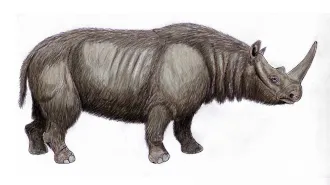
Finds at sites in Spain and France suggest that Neandertals used the teeth of ancient rhinos for heavy-duty fabrication.
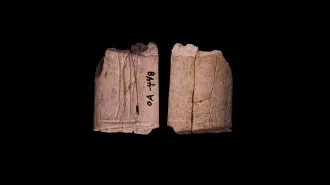
A study of ancient artifacts suggests Native American dice games began thousands of years earlier than previously documented.
Fossil jaw remains found in Egypt suggest that the earliest modern apes evolved in North Africa, not in East Africa where most fossils have been found.
Two new studies suggest that genetically stable dogs were living among humans in Europe by about 14,000 years ago.
A team of scientists re-created the way Neandertals made birch tar and found its antibacterial properties could fight off skin infections.
Data suggest people lived at Chile’s Monte Verde site thousands of years later than thought, challenging key “pre-Clovis” evidence. Not all agree.