Anthropology
- Archaeology
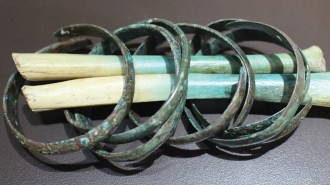
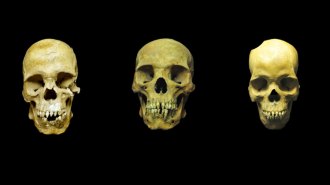
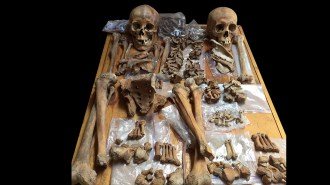
Bones from an Iron Age massacre paint a violent picture of prehistoric Europe
Bones left unburied, and in one case still wearing jewelry, after a massacre add to evidence that prehistoric Europe was a violent place.
- Anthropology
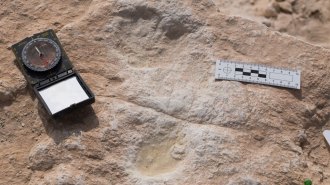
Seven footprints may be the oldest evidence of humans on the Arabian Peninsula
In what’s now desert, people and other animals stopped to drink at a lake more than 100,000 years ago, a new study suggests.
- Anthropology
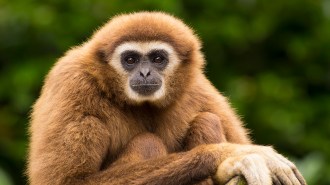
A stray molar is the oldest known fossil from an ancient gibbon
A newly described tooth puts ancestors of these small-bodied apes in India roughly 13 million years ago.
- Humans
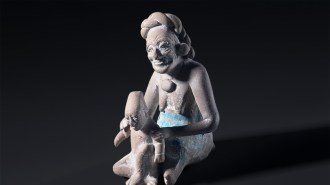
Ancient sculptures hint at universal facial expressions across cultures
Interpreting the emotions carved onto sculptures from long ago offers a new way to study how humans perceive facial expressions.
- Anthropology
Better playground design could help kids get more exercise
Playgrounds designed for imaginative play can make a difference in how much kids move
- Genetics
South Americans may have traveled to Polynesia 800 years ago
DNA analyses suggest that Indigenous people from South America had a role in the early peopling of Polynesia.
- Life
Scientists want to build a Noah’s Ark for the human microbiome
Just as the Svalbard Global Seed Vault protects global crop diversity, the Microbiota Vault may one day protect the microbes on and in our bodies.
- Genetics
The oldest genetic link between Asians and Native Americans was found in Siberia
DNA from a fragment of a 14,000-year-old tooth suggests that Native Americans have widespread Asian ancestry.
- Anthropology
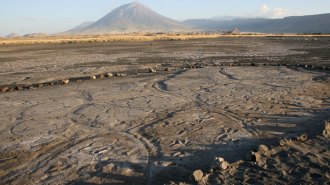
Africa’s biggest collection of ancient human footprints has been found
Preserved impressions in East Africa offer a glimpse of ancient human behavior.
- Anthropology
The earliest known humans in Europe may have been found in a Bulgarian cave
New finds from Bulgaria point to a relatively rapid expansion of Homo sapiens into Eurasia starting as early as 46,000 years ago, two studies suggest.
- Anthropology
16th century skeletons suggest the slave trade brought some diseases to Mexico
Slaves buried in a 16th century grave in Mexico had hepatitis B and yaws, suggesting the slave trade helped spread some versions of those diseases.
- Anthropology
Skeletal damage hints some hunter-gatherer women fought in battles
Contrary to traditional views, women in North American hunter-gatherer societies and Mongolian herding groups likely weren’t all stay-at-home types.