432 results
432 results for: grassland
- Climate
Heat waves stunt grassland growth
An abnormally hot year can significantly suppress growth in grasslands, a stifling effect that lingers well into the next year even if temperatures return to normal. It can also hinder how well the grasslands absorb carbon dioxide from the atmosphere.
- Agriculture
Some bioenergy crops are greener than others
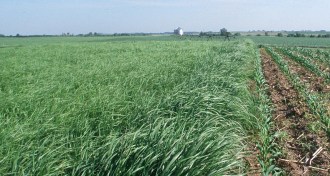
In the Upper Midwest, switchgrass trumps maize at boosting ecological health.
-
- Humans
Fewer fires in Africa these days
How flames spread, not how frequently people start them, controls burning on the continent.
- Humans
Oceans set stage for human evolution
Temperature changes off the coast dried out East Africa and allowed grasslands to spread starting around 2 million years ago.
- Animals
Bird fads weaken sexual selection
There's a new look for a hot male among lark buntings every year.
-
New World Stopover: People may have entered the Americas in stages
People first reached the edge of the Americas about 40,000 years ago but had to stay put for at least 20,000 years before melting ice sheets allowed them to move south and settle the rest of the continent.
- Health & Medicine
Neandertals, gut microbes and mail-order ancestry tests
Geneticists weigh in during the annual meeting of the American Society of Human Genetics.
- Earth
Corals, turfgrass and sediments offer stories of climate past and future
Science News reports from San Francisco at the fall meeting of the American Geophysical Union
- Climate
Winter birds shift north
More than 170 common North American species are wintering farther north than they did in the past.
- Archaeology
Horse domestication traced to ancient central Asian culture
New lines of evidence indicate that horses were domesticated for riding and milking more than 5,000 years ago by members of a hunter-gatherer culture in northern Kazakhstan.
- Anthropology
Peking Man fossils show their age
Scientists have pushed back the age of Peking Man, raising questions about whether Homo erectus trekked to eastern Asia in two separate migrations.