Search Results for: Vertebrates
Skip to results
1,562 results
1,562 results for: Vertebrates
- Chemistry
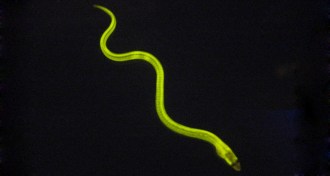
An eel’s glow could illuminate liver disease
Fluorescent protein binds to bilirubin, a compound the body must eliminate.
- Life
Primitive fish could nod but not shake its head
Ancient fossils reveal surprises about early vertebrate necks, abdominal muscles.
- Animals
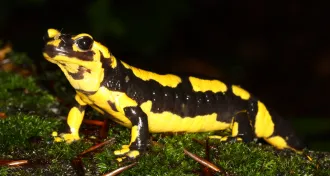
New fungus species found killing salamanders
First there was amphibian killer fungus Bd. Now there's Bs.
- Genetics
Genes for body symmetry may also control handedness
Lefties and righties can thank same genes that put hearts on left side for hand dominance, study of thousands of people’s DNA suggests.
- Animals
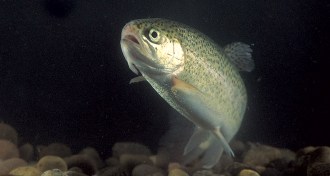
Frustrated fish get feisty
Smaller rainbow trout become more aggressive towards bigger fish when they don’t their usual treats.
- Life
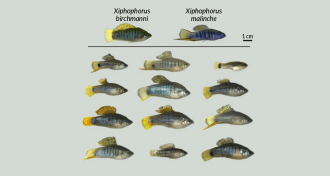
Genes gives clues to outcome of species interbreeding
Genetics provides clues to why hybrid river fish formed a subspecies but insects formed a new species.
- Life
Domesticated animals’ juvenile appearance tied to embryonic cells
Mild defects in embryonic cells could explain physical similarities along with tameness across domesticated species.
- Humans
Letters from the March 1, 2008, issue of Science News
Big evolvers Regarding “Whales Drink Sounds: Hearing may use an ancient path” (SN: 2/9/08, p. 84), I have heard that whales evolved millions of years ago into their present form, including their very large brains. We humans must be relatively recent in terms of our brain structures. Are there data concerning evolutionary development in whales? […]
- Life
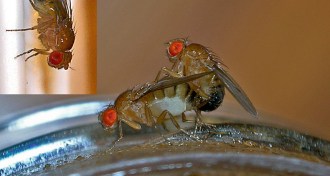
Rivalry helps fruit flies maintain brainpower
In lab tests, males dim mentally after generations without competitors.
- Health & Medicine
The two faces of prion proteins
Scientists are learning more about the protein behind mad cow and Creutzfeldt-Jakob disease, including how to interfere with the protein’s production in the brains of mice.
- Animals
We all sing like fish
From opera singers to toadfish, vertebrates may use basically similar circuitry for controlling vocal muscles.
- Life
How the snake got its fangs
A study of snake embryos suggests that fangs evolved once, then moved around in the head to give today’s snakes a variety of bites.