6,914 results
6,914 results for: Bears
-
From the March 12, 1932, issue
UNEARTH NEW PORTRAIT OF KING TUT’S GIRL-WIFE A new portrait of the girl-wife of that well-known Egyptian pharaoh, Tutankhamon, has been unearthed from the ruins of Tel-el-Amarna, where the Egypt Exploration Society has been excavating. The portrait is a beautiful little head, with exquisitely modeled features. It is less than 2 inches long. Identity of […]
- Health & Medicine
Fibroid Maladies
Every year, roughly 200,000 women in the United States get a hysterectomy–surgical removal of the uterus–to alleviate the pain and pressure of uterine fibroids. These noncancerous growths affect millions of women in child-bearing years. A good source of information on symptoms, treatments, surgical options, and possible causes is found at this site, compiled by the […]
-
From the April 2, 1932 issue
TELETYPEWRITERS CAN NOW BE USED IN HOME On the cover of this issue of the Science News Letter is shown a portion of the mechanism of the teletypewriter, a hybrid medium of communication. The new teletypewriter service is a telegraph system with telephone methods and typewriting thrown in for luck. It is now possible to […]
- Humans
Letters from the May 5, 2007, issue of Science News
Mere kats? “Science behind the Soap Opera” (SN: 3/3/07, p. 138) shows that meerkats bear an uncanny resemblance to human beings. We, too, have an innate sense of responsibility for our group and individually commit acts of unspeakable violence. John HagerhorstFrederick, Md. Just a dram “Natural-Born Addicts: Brain differences may herald drug addiction” (SN: 3/3/07, […]
- Climate
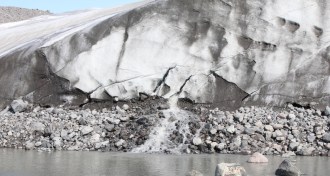
Glacial microbes gobble methane
While some bacteria produce methane in Greenland’s melting ice sheet, others may consume the greenhouse gas as it escapes.
- Humans
Letters from the May 19, 2007, issue of Science News
Merry go round When considering a spin rate of 1,122 revolutions per second, has anyone determined the diameter of the neutron star XTE J1739-285 (“Dance of the dead,” SN: 3/17/07, p. 173)? If, for example, it were the same diameter as Earth, it would be traveling far in excess of the speed of light at […]
- Animals
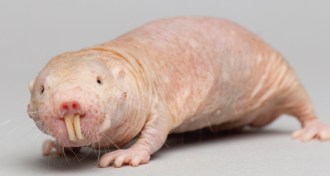
How to milk a naked mole-rat
For the sake of science, Olav Oftedal has milked bats, bears and a lot of other mammals. But a naked mole-rat was something new.
- Humans
Letters from the August 18, 2007, issue of Science News
Exhaustive analysis I would debate the “1,000 watts or more” value attributed to typical adults during strenuous exercise (“Powering the Revolution: Tiny gadgets pick up energy for free,” SN: 6/2/07, p. 344). Hiking up steep slopes, I rarely exceed 250 W myself, and typical hikers are going much slower. The 1,000-watt figure can only apply […]
- Psychology
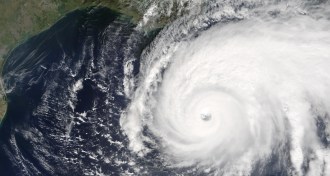
Stereotypes might make ‘female’ hurricanes deadlier
Precautions may get shelved by those in the path of severe storms with feminine names, leading some to suggest that storms should be named after animals.
- Paleontology
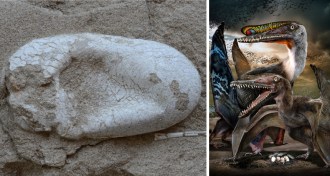
Preserved pterosaur eggs hint at reptile’s social life
The first 3-D pterosaur eggs, which were found in China, suggest that the flying reptiles laid eggs together.
- Astronomy
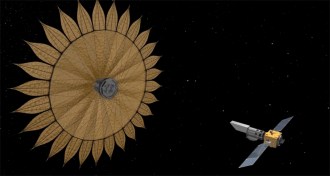
Stopping starlight may bring other Earths into focus
Two new telescope concepts compete for NASA’s approval, in hopes of taking the first picture of a life-bearing exoplanet.
- Tech
Scientists struggle to find signals in the noise
Even in a simple system like email, detecting the signal from the noise is not always easy. It can be even more difficult separating a dazzling discovery from dust or whether a breast mass is cancerous or benign.