NASA seems to be backing away from hunting for life on Mars
The agency’s shifting priorities are putting a 50-year search for Martian life in limbo

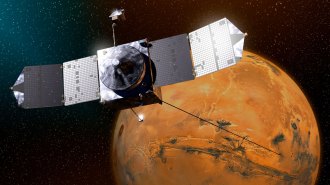
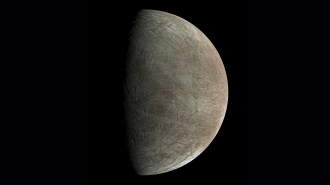
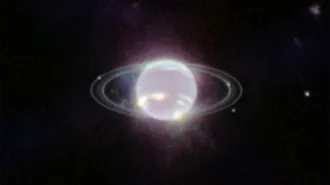
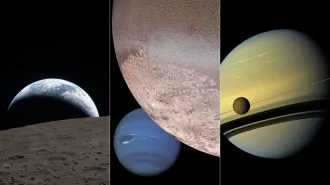
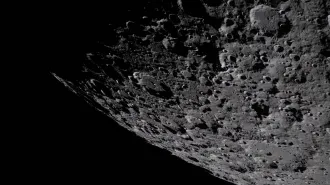
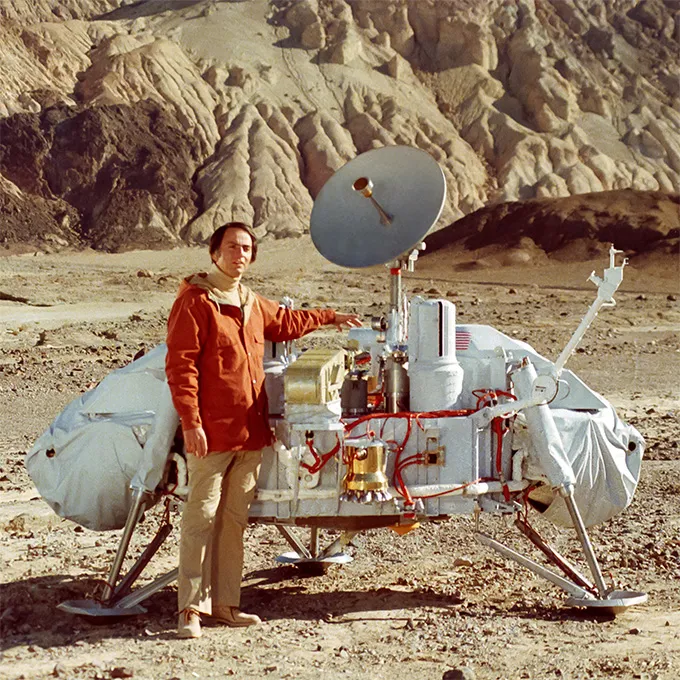
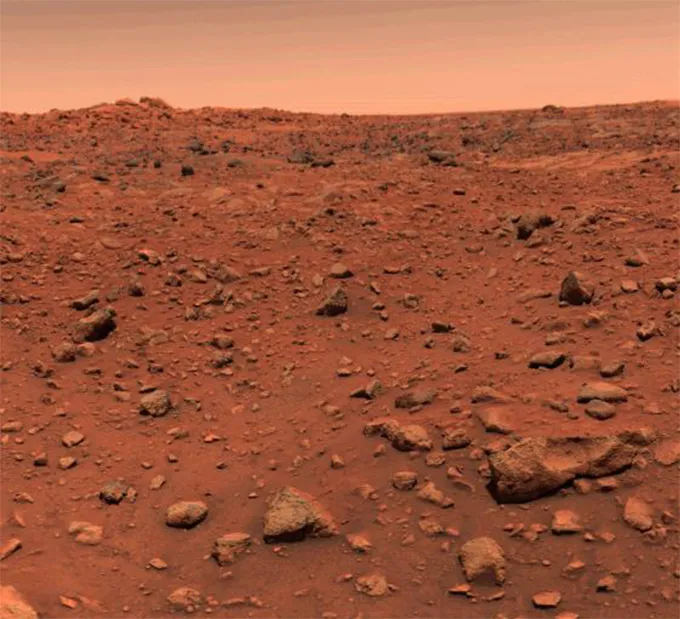
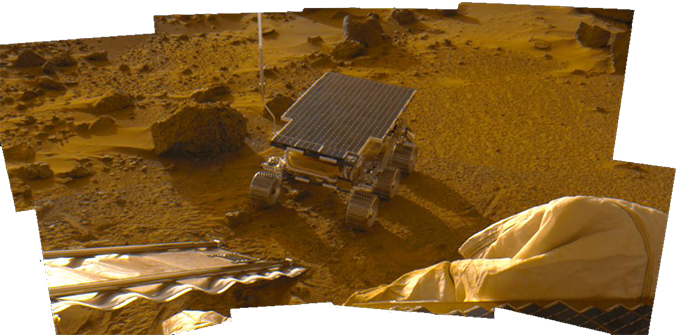
Photo-illustration by Valerie Chiang; From top: JPL-Caltech/NASA; JPL/NASA, MSSS; NASA; NASA
This is a human-written story voiced by AI. Got feedback? Take our survey . (See our AI policy here .)
It was America’s bicentennial, July 4, 1976, and NASA was hoping not to see fireworks. After a 10-month traverse through space, the Viking 1 lander was ready to become the first spacecraft to operate on Mars — if it didn’t crash on the unexpectedly rugged ground first. More than two tense weeks passed while mission managers searched for a suitable landing site. Viking ultimately sank its footpads into Martian soil on July 20. The robot’s twin, Viking 2, landed safely that September.
Together, the Viking landers had an ambitious goal, one that had never before been attempted on another planet: search directly for signs of life.
Shortly before the first landing, astronomers Carl Sagan and Joshua Lederberg wrote in the journal Icarus: “Large organisms, possibly detectable by the Viking lander cameras, are not only possible on Mars; they may be favored.”
To Sagan, Lederberg and Mars dreamers like them, finding life elsewhere has been an existential quest. If life arose just once, it could be a fluke, a lucky alignment of vanishingly rare conditions. But if life also happened somewhere else, independent of Earth, it means we’re not just a cosmic anomaly.
Our russet neighbor in particular has many Earthlike qualities, so if it ever hosted life, that would be a promising sign for it sprouting elsewhere across the galaxy.
The Viking experiments delivered ambiguous results. Most biologists saw them and gave up on Martian life, but some scientists never lost faith. The uncertainty kicked off a half century of ups and downs in NASA’s relationship with the Red Planet. Now, after decades of methodically refining their understanding of Mars and how to study it, scientists are ready to finish what Viking started.
But the search for life on Mars keeps getting delayed by the complexities of life on Earth. NASA’s efforts to bring Mars rocks back home are being knocked off course by political struggles in the United States. NASA and private space companies alike are shifting focus from exploring the solar system with robots to sending humans to the moon. And a European rover that aims to search for life on Mars has been delayed over and over by failure, plague and war.
Still, the sense that the answer to the great cosmic question could be nearer than ever has many holding out hope for the Red Planet, despite the frustrations.
“Mars has always allured us, even when it’s been disappointing,” says Ashwin Vasavada, who has been one of the project scientists for NASA’s Curiosity Mars rover since 2004. “The whole history of Mars exploration is a big roller coaster.”
The first look
Astronomers in the late 1800s saw signs of life everywhere they looked on Mars. Dark splotches that varied over the Martian year were interpreted as seasonal vegetation. Or else the dark patches were salty seas, and lines crisscrossing and connecting them were waterways built by a civilization complex enough to have engineered canals.
In 1971, NASA’s Mariner 9 orbiter revealed the “vegetation” as dust in the atmosphere, and the canals as a mirage. Other measurements showed Mars was a frigid desert with low atmospheric pressure. The avenues for life narrowed considerably.
That was a setback for Mars hopefuls, but they rallied. Maybe they had to think smaller. Life on Earth can take minuscule forms, some of which thrive in environments akin to Martian conditions. If life on Mars couldn’t be detected with telescopes and cameras, maybe it could be caught in an interplanetary test tube.
So the twin Viking landers were designed to look for microbial life. After transmitting photos of their surroundings, both landers extended their robotic arms, scooped up a bit of Martian soil and deposited it into three separate life detection experiments, plus others to assess the sample’s chemistry and geology.
One experiment replaced Martian air with inert helium gas and added liquid nutrients to a soil sample, earning the instrument the nickname “chicken soup.” The idea was that any microorganisms in the soil that could metabolize the nutrients would change the concentration of gases as they respired. The experiment could detect and measure those changes with a gas chromatograph.
The second, called the labeled release experiment, added a dab of liquid nutrients tagged with radioactive carbon‑14 isotopes to the soil. If anything metabolized those nutrients and emitted a carbon-containing gas as a by-product, the resulting gas would also contain the radioactive isotope. Similarly, the third experiment exposed dry soil to gas with carbon‑14 isotopes and heated it to see if any organisms took in the tagged carbon.
Another experiment looked for organic molecules — the backbones of life on Earth — by heating soil samples to different temperatures and measuring the molecular weights of vaporized chemicals. If any organics were present, this gas chromatograph–mass spectrometer should have been able to find them.
Initial results looked promising. The chicken soup experiment did detect gases, although they could have been from unexpected chemistry in the soil rather than microbes. And the labeled release experiment detected radioactively labeled carbon dioxide. But surprisingly, the mass spectrometer found essentially no organic molecules at all. The only organics identified in the heated samples were chloromethane and dichloromethane, which the team thought were contaminants from cleaning fluids used back on Earth. Mars, apparently, had fewer organics than even the moon.
The biologists were flummoxed. Astrobiologist Ben Clark of the Space Science Institute in Boulder, Colo., who worked on one of the geology experiments on Viking, shared an office wall with the biology team. “Some of them thought they had discovered life and others thought they hadn’t,” Clark recalls. “We would sometimes hear loud arguments through the walls.”
Ultimately, many scientists concluded that no organics meant no life. “Once [the biologists] got convinced that they didn’t find life, they totally lost interest in Mars,” Clark says.
But some scientists held on. The lead researcher on the labeled release experiment, Gilbert Levin, maintained until his death in 2021 that the experiment’s results could be consistent with life. And even at the time, some scientists saw a glimmer of where the search was headed next.
“[T]he present Martian environment … presents formidable challenges to any putative Martian organisms,” biologist Peter Mazur of Oak Ridge National Laboratory in Tennessee and colleagues wrote in 1978 in Space Science Reviews. “The Martian environment in the past, on the other hand, appears to have been considerably less hostile.”
Journey to the past
The Viking landers continued working into the early 1980s. Still, NASA had more or less moved on. “After Viking, partly because we didn’t discover life, it was decided to turn away from Mars and not do much of anything for about 20 years,” Clark says.
Some of the delay wasn’t Mars’ fault. NASA shifted focus to human spaceflight for a while, formally starting the space shuttle program in 1972. Then, in 1986, the space shuttle Challenger broke apart shortly after launch. The disaster halted shuttle launches for more than two years and delayed the launch of some planetary missions, including the next planned Mars mission. The $813 million Mars Observer launched in 1992, but lost contact with Earth just before it reached Mars orbit and was never heard from again.
Overall, it was a rough patch for NASA. At the same time, though, some started dreaming of sending humans deeper into space. In a July 20, 1989 speech, President George H.W. Bush called for sending humans back to the moon and eventually on to Mars. The sense that the Red Planet was becoming cool again was growing.
Mars scientists regrouped. Viking had made it clear that you can’t land just anywhere and expect to pick up signs of life. But what if you looked somewhere else — or somewhen else?
“They really went for it with Viking — the very first time you ever land, you try to detect life,” Vasavada says. The thought was, “we’re going to take a step back.… We’re going to get to know Mars all over again.”
By the early 1990s, a plan took shape. Send more spacecraft more often, ideally at launch opportunities every 26 months. Ask science questions that build on each other and build up the technical skills to eventually bring samples to Earth. After a rocky start, it worked. Today, there has been at least one NASA spacecraft orbiting, sitting or roving on Mars since 1997 with no gaps. “It really was a reboot after Viking,” Vasavada says. “It’s a golden age, in retrospect.”
A successful string of rovers and orbiters that launched in the first two decades of the 21st century has transformed scientists’ view of Mars. The planet today may be an arid icebox, but billions of years ago, it was a lot more like Earth. Liquid water pooled and flowed across the surface and seeped underground. Some of those wet environments may have had temperature and chemical conditions that could have made cozy homes for microbes.
In 2008, NASA’s Phoenix lander provided an explanation for Viking’s lack of organics: Mars’ soil contains perchlorate salts, a class of oxidizing agents that are sometimes used in rocket fuel. Experiments on Earth published in 2010 showed that when heated with a Mars soil analog, a perchlorate salt can break down into chemicals that in turn break down organic compounds. The resulting molecules were chloromethane and dichloromethane, the same chemicals attributed to cleaning fluids on Viking. Maybe by heating the soil, Viking’s instruments inadvertently destroyed the very thing they were looking for. In fact, there are organic molecules locked in Martian rocks; NASA’s Curiosity rover finally found them in 2014.
“I think it’s widely accepted that ancient Mars was capable of supporting life,” says planetary geologist Katie Stack Morgan of NASA’s Jet Propulsion Laboratory in Pasadena, Calif. “The question is, was it there? Did it happen?”
Budget cuts and leopard spots
Stack Morgan is closer to answering that question than almost anyone else in the world. She is a deputy project scientist for the latest Mars rover, Perseverance, which landed in an ancient river delta in 2021 and is still going. Part of its mission is to achieve the aspirations of the last 20 years of Mars science: cache samples of particularly interesting rocks for eventual return to Earth.
Mars scientists have been longing to get their hands on rock samples since before the Viking missions and have had some kind of “Mars sample return” in the strategic plan since the ’90s. Earthly labs have better equipment than we can currently shrink down to fit on a rover. And caching samples on Earth means they can be studied with new techniques in the future.
“When you do a space mission, it goes on for as long as the mission lasts and then maybe a few years after,” says Clark, who has worked on each of NASA’s landed Mars missions and on successful sample return missions that visited a comet and an asteroid. “With the samples, people keep inventing new ways to study them. It kind of never ends.”
In the early 2020s, NASA and the European Space Agency were actively working on a Mars sample return campaign that would send another vehicle to collect Perseverance’s samples. It was ambitious and exciting — until it fell victim to U.S. budget cuts in March 2024.
The Mars community came together to figure out how to move forward, that December publishing a “plan for a sustainable science program at Mars” for the next 20 years. Almost immediately, President Donald Trump took office and released a flurry of executive orders that sent confusion rippling through the federal government. Trump’s first budget request cut almost half of NASA’s science funding. Congress rejected that budget, but the bill that included NASA didn’t pass until this past January, by which time the agency had already started making some of the president’s requested cuts, according to a report released by House Democrats this April.
Amid this environment of uncertainty appeared the most biologically exciting Mars rock in decades. In July 2024, Stack Morgan and colleagues announced that Perseverance had drilled into a rock that might contain signs of ancient microbes on Mars. The rock, called Cheyava Falls, sports a pattern resembling leopard spots, with iron phosphate and iron sulfate molecules around their rims. Similar patterns in rocks on Earth result from chemical reactions associated with ancient microbial life. Stack Morgan and colleagues stop well short of claiming the rock pattern is a sign of life, but she’s comfortable calling it a “potential biosignature.” The only way to know for sure is to bring the rock home.
“We have not abandoned bringing samples from Perseverance back,” Mars Exploration Program Director Tiffany Morgan of NASA Headquarters said at an April meeting of the Mars Exploration Program Analysis Group.
It’s just not clear how, or when. NASA is once again looking away from Mars and toward crewed missions closer to Earth. The only proposed new NASA vehicles for Mars are a telecommunications orbiter and a nuclear propulsion tech demonstration called Space Reactor-1 Freedom. That spacecraft would carry Mars-exploring helicopters for a mission called Skyfall. But there’s no guarantee that those helicopters will do any science, and no plan for how to determine what science they should do. In the United States, Mars is receding into the background — still a goal, but as distant as ever.
The little rover that could
The history of Mars exploration is pretty much entirely a NASA story. But the future might not be. In recent years, China, India and the United Arab Emirates have all launched successful missions to the Red Planet. China plans to launch a Mars sample return mission of its own in 2028, due to return in 2031. And after a decade of delays, a rover from the European Space Agency, ExoMars, is preparing to launch in two years, aiming to make the first life detection measurements since Viking.
The ExoMars mission is no stranger to setbacks. It originally included NASA, but NASA pulled out in 2012, citing budget problems. The Russian space agency, Roscosmos, also collaborated on the mission, offering launch vehicles and its launchpad in Kazakhstan.
The mission had three parts: an orbiter and lander scheduled to launch in 2016, and a rover later named after DNA research pioneer Rosalind Franklin to follow in 2018.
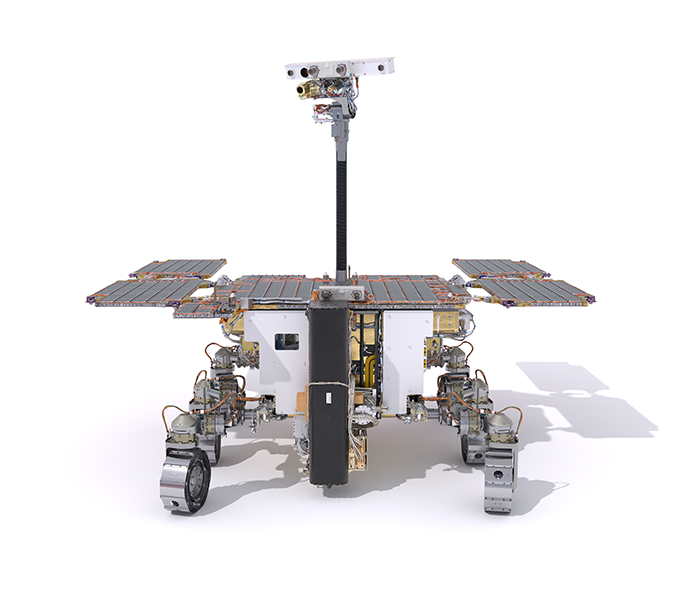
The orbiter arrived on time and has been measuring trace amounts of methane and other gases in the Martian atmosphere and serving as a communications relay for various rovers. But the lander, called Schiaparelli EDM, crash landed on Mars. Meanwhile, technical issues delayed the rover’s launch to 2020; the COVID-19 pandemic pushed it back to 2022. Launch opportunities to Mars come once every two years, so every setback was significant.
ExoMars project scientist Jorge Vago was giving a talk to high school students in Istanbul in February 2022. The team was one week away from bringing the rover to Kazakhstan to prepare for a September launch.
“We had packed the crates, we even had the celebration T-shirts and the wine bottles stacked,” Vago says. “We were ready to go.” Near the end of the talk, he noticed he had lost his audience’s attention; everybody was looking at their phones. Russia had invaded Ukraine.
It soon became clear that partnership with Roscosmos on the mission could not continue. “It was traumatic at the time. It was a heavy blow,” Vago says. “We didn’t know if, after almost then 18 years of work, if this thing was the end.”
Thankfully, it wasn’t. NASA rejoined forces with ESA in 2024. President Trump’s 2026 budget request threatened to pull the agency out again, but Congress rejected it and awarded the launch contract to SpaceX.
The Rosalind Franklin rover will take a longer-than-usual route to Mars to avoid landing during dust storm season. If all goes well, it will touch down in 2030 at a site called Oxia Planum, where the rocks are 4 billion years old and full of clays called phyllosilicates that form when organics are in prolonged contact with liquid water. “It’s an amazing landing site,” Vago says. “The hypothesis is that it could have been the coast of this very large ocean that some people think may have existed early in the history of Mars.”
The team took lessons from every previous mission to Mars in developing its life-hunting instruments, Vago says. The most exciting one is the Mars Organic Molecule Analyzer, which has a laser that can extract organics from crushed rocks without activating the organic-wrecking perchlorate molecules that could have confounded Viking.
By now, scientists know that no single measurement will be enough to convince either themselves or the world that they’ve actually found life on Mars. The ExoMars science team designed a metric called the ExoMars Biosignature Score to help vet their findings. The score counts things such as the morphology of sedimentary structures, chemical biosignatures and geologic context.
“We don’t think that any one verified biosignature is sufficient,” Vago says. He expects to work for at least two years after he gets the data before coming to any conclusions. “We need several independent lines of evidence that cannot be explained away by anything but biology.”
A 2028 launch date means the Rosalind Franklin rover will launch alongside China’s proposed sample return mission. Some might see the overlap as competition for scarce resources or national glory. But Vago doesn’t feel like he’s in a race. More Martian–life seekers could mean a more robust search. The quest doesn’t have to stop when political circumstances change.
“I wish everybody well,” Vago says. “In the end, we all want to learn things that are important for us as humankind.”