News
-
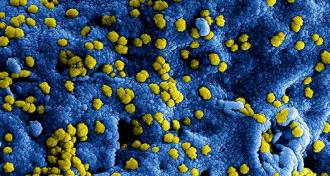
LifeHIV hides in growth-promoting genes
The discovery that HIV can trigger infected cells to divide means scientists may need to rethink strategies for treating the virus that causes AIDS.
-
Health & MedicineHidden heart rhythm problem may underlie some strokes
In two clinical studies, people who had had strokes with no trigger sometimes also had undiagnosed atrial fibrillation.
By Nathan Seppa -
AstronomyRare trio of supermassive black holes found
Three supermassive black holes residing where two distant galaxies collide offer new clues about where to look for gravitational waves.
-
Science & SocietyWeapon inspection scheme would test for nukes but keep designs secret
Technique borrowed from computer science could improve weapon verification and encourage countries to agree to nuclear disarmament.
By Andrew Grant -
AnimalsLionfish dance can recruit partner for hunting
Slow but superb predators recruit pals for cooperative hunting, often striking in what looks like well-mannered turn taking.
By Susan Milius -
Health & MedicineJunk food ahead of pregnancy may harm baby-to-be
Women who have poor diets in the year before conception might have a higher risk of delivering a baby preterm than do women who eat healthful foods
By Nathan Seppa -
AstronomyGalaxy seed found from 3 billion years after Big Bang
A still-growing core of a galaxy in the early universe may help astronomers understand how massive elliptical galaxies get their start.
-
AnimalsPassenger pigeon population had booms and busts
DNA says the birds recovered from hard times — until people came along.
By Susan Milius -
LifeAutoimmune diseases stopped in mice
Reprogramming immune cells may offer a way to treat autoimmune diseases without harming the body’s ability to fight infections.
-
HumansSkulls reveal Neandertal’s hodge-podge genealogy
A new analysis of ancient hominid skulls reveals a patchy anatomical start of the Neandertal lineage.
-
Quantum PhysicsCommercial quantum computer fails to impress in new test
Fifteen million dollar D-Wave machine runs no faster than traditional computer in head-to-head challenge.
By Andrew Grant -
NeuroscienceSunbathing may boost endorphins in the body and brain
UV light makes mice churn out a molecule that is a cousin of morphine and heroin, a finding that may explain why some people seek out sunshine.