All Stories
- Animals
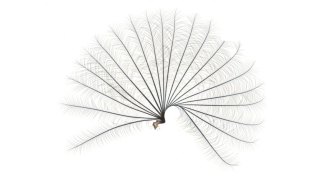
Here’s why some water striders have fans on their legs
A fan of tiny, elegant plumes on their legs helps certain water striders dash across flowing water without getting wet.
- Health & Medicine
Artificial insulin-releasing cells may make it easier to manage diabetes
Synthetic cells crafted in the lab could provide a more precise, longer-lasting diabetes treatment.
- Animals
Alligators eat sharks — and a whole lot more
Alligators aren’t just freshwater creatures. They swim to salty waters and back, munching on plenty of foods along the way.
- Planetary Science
See a new mosaic of images of comet 67P from the Rosetta mission
A montage of images taken by the Rosetta spacecraft and its lander, Philae, recap the daring mission to comet 67P.
- Animals
Leafhoppers use tiny light-absorbing balls to conceal their eggs
Leafhoppers produce microscopic balls that absorb light rather than reflect it and help camouflage the insects’ eggs.
- Paleontology
What male bias in the mammoth fossil record says about the animal’s social groups
Male woolly mammoths were more often caught in natural traps that preserved their remains, DNA evidence suggests.
- Animals
No more than 800 orangutans from this newly identified species remain
Endangered population of orangutans is the oldest surviving red ape lineage, a new study finds.
- Animals
Ants were among the world’s first farmers
50 years ago, researchers began unraveling the secrets to Attine ants’ green thumbs.
- Archaeology
Mystery void is discovered in the Great Pyramid of Giza
High-energy particle imaging helps scientists peek inside one of the world’s oldest, largest monuments.
- Earth
Dino-dooming asteroid impact created a chilling sulfur cloud
The Chicxulub impact spewed more sulfur than previously believed.
- Earth
Wind may be driving the melting of East Antarctica’s largest glacier
Winds may be helping warm ocean waters speed up the melting of East Antarctica’s largest glacier.
- Astronomy
The way hungry young stars suck in food keeps most X-rays in, too
The columns of plasma that feed growing stars develop an extra layer that keeps X-rays in.