All Stories
- Planetary Science
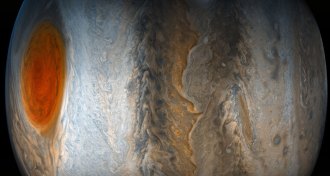
Jupiter’s massive Great Red Spot is at least 350 kilometers deep
NASA’s Juno spacecraft has measured the depth of Jupiter’s Great Red Spot for the first time.
- Animals
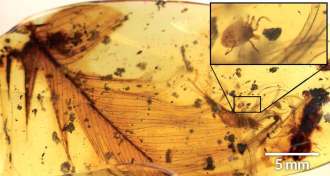
Ticks had a taste for dinosaur blood
A tick found trapped in amber is evidence the bloodsuckers preyed on feathered dinosaurs, a new study says.
- Life
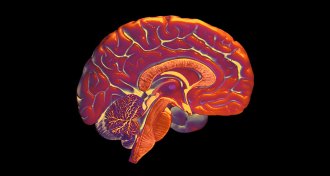
Mini brains may wrinkle and fold just like ours
Brain organoids show how ridges and wrinkles may form.
- Life
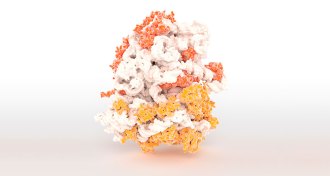
Not all of a cell’s protein-making machines do the same job
Ribosomes may switch up their components to specialize in building proteins.
- Earth
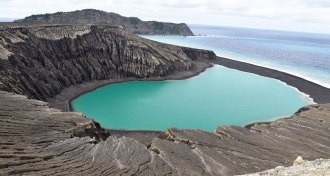
Watching this newborn island erode could tell us a lot about Mars
The birth and death of a young volcanic island in the Pacific Ocean may shed light on the origins of volcanoes in Mars’ wetter past.
- Planetary Science
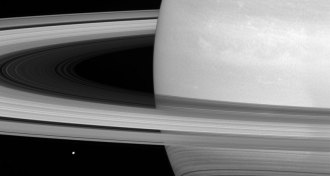
Saturn’s rings mess with the gas giant’s atmosphere
Data from Cassini’s shallow dives into Saturn’s ionosphere show that this charged layer in the atmosphere interacts with the planet’s rings.
- Animals
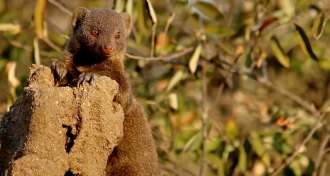
Once settled, immigrants play important guard roles in mongoose packs
Dwarf mongoose packs ultimately benefit from taking in immigrants, but there’s an assimilation period.
- Animals
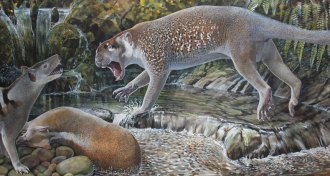
This ancient marsupial lion had an early version of ‘bolt-cutter’ teeth
Extinct dog-sized predator crunched with unusual slicers toward the back of its jaw.
- Astronomy
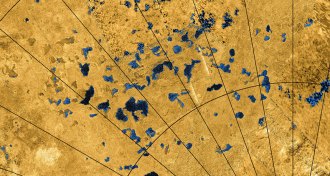
Most complete map of Titan reveals connected seas and cookie-cutter lakes
The latest map of Titan, based on all the data from the Cassini spacecraft, displays new details about the moon’s lakes and seas.
- Health & Medicine
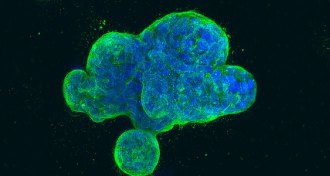
When tumors fuse with blood vessels, clumps of breast cancer cells can spread
Breast cancer tumors may merge with blood vessels to help the cancer spread.
- Physics
Some high-temperature superconductors might not be so odd after all
Unusual high-temperature superconductors might be explained by standard superconductivity theory.
- Animals
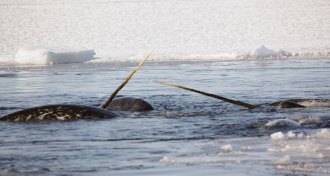
Narwhals react to certain dangers in a really strange way
After escaping a net, narwhals significantly lower their heart rate while diving quickly to get away from humans.