All Stories
- Animals
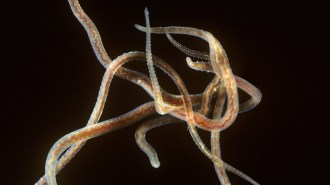
These worms move faster when you give them less space
California blackworms can squeeze through narrow channels faster than they can wriggle across wide ones, a finding that may help with robot design.
- Science & Society
To nap or not to nap? Science is still waking up to the question
Many people struggle to sleep enough at night. Surprisingly, science cannot say if adding in a nap to sleep in two blocks is healthy.
- Physics
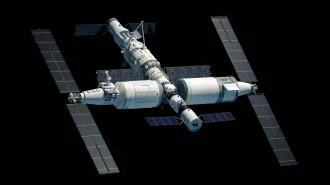
Free-falling atoms in space put a new twist on Galileo’s gravity test
Rubidium atoms on China’s Tiangong space station fell with the same acceleration, upholding a cornerstone of Einstein’s general theory of relativity.
- Health & Medicine
Your skin chemistry may affect which mosquitoes most want to bite you
Three species preferred different people based on their skin odor and bacteria. The findings could help make new microbe-based repellants.
- Space
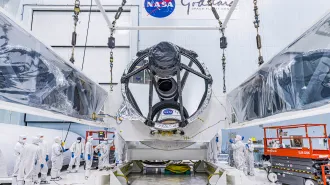
NASA’s new space telescope will reveal the universe like never before
NASA’s new Nancy Grace Roman space telescope will tackle nearly every aspect of astrophysics, including dark matter, dark energy and alien planets.
- Earth
Tiny tremors can’t always warn when fracking will trigger a bigger quake
A study of 70,000 earthquakes finds tiny tremors often precede larger fracking-linked quakes, offering a warning to halt fluid injection.
- Earth
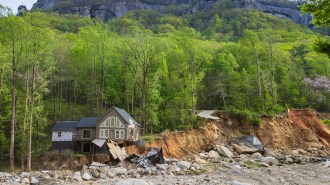
Landslides pose the largest risks to those who can least afford them
Appalachia is a hotspot of landslides, but many there can’t afford to move away or mitigate the danger, a new study finds. Wealthy urban residents can.
- Astronomy
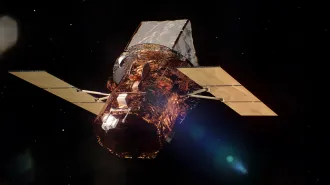
A space telescope was falling from orbit. Its rescue mission fell apart too
NASA’s attempt to save the falling Swift telescope failed, revealing the realities of the burgeoning field of satellite servicing.
- Animals
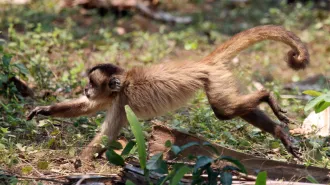
Monkeys hunt small animals when fruit is scarce
Capuchins hunt and eat small vertebrates more often as plant foods wane. The behavior may help us learn more about humans’ early dietary evolution.
- Paleontology
Once upon a time, insects had 24 legs
A many-legged oddball from long ago helps fill a major gap in the fossil record — and hints at how insects ended up with just six legs.
- Planetary Science
Microbes might get freeze-dried on the moon’s south pole
Artemis IV will put people on the moon’s surface for the first time in 50 years. NASA research reveals the microbes that might hitch a ride.
- Health & Medicine
A new cancer vaccine may keep melanoma from coming back
A personalized mRNA vaccine paired with Keytruda may help keep skin cancer from returning after surgery, a large clinical trial suggests.